Geoffroy's Cat
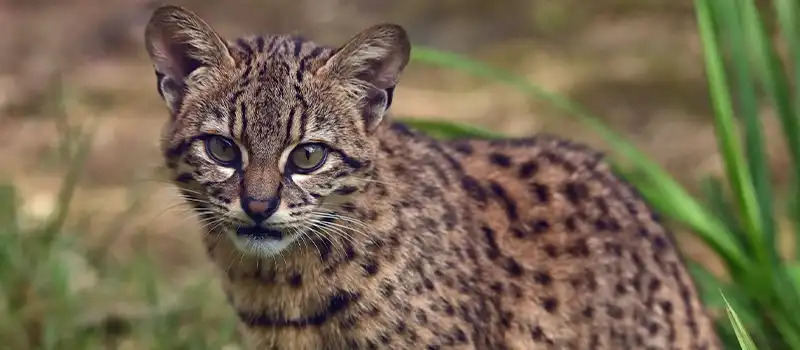
Geoffroy’s cat is a small wild feline native to South America, where it inhabits a great diversity of ecosystems ranging from humid tropical forests to savannas and mountainous areas of the Andes. It is found mainly in countries such as Argentina, Paraguay, Brazil, Bolivia, and Uruguay. Despite its small size, this feline is an agile and efficient predator, perfectly adapted to its environment.
Size and weight
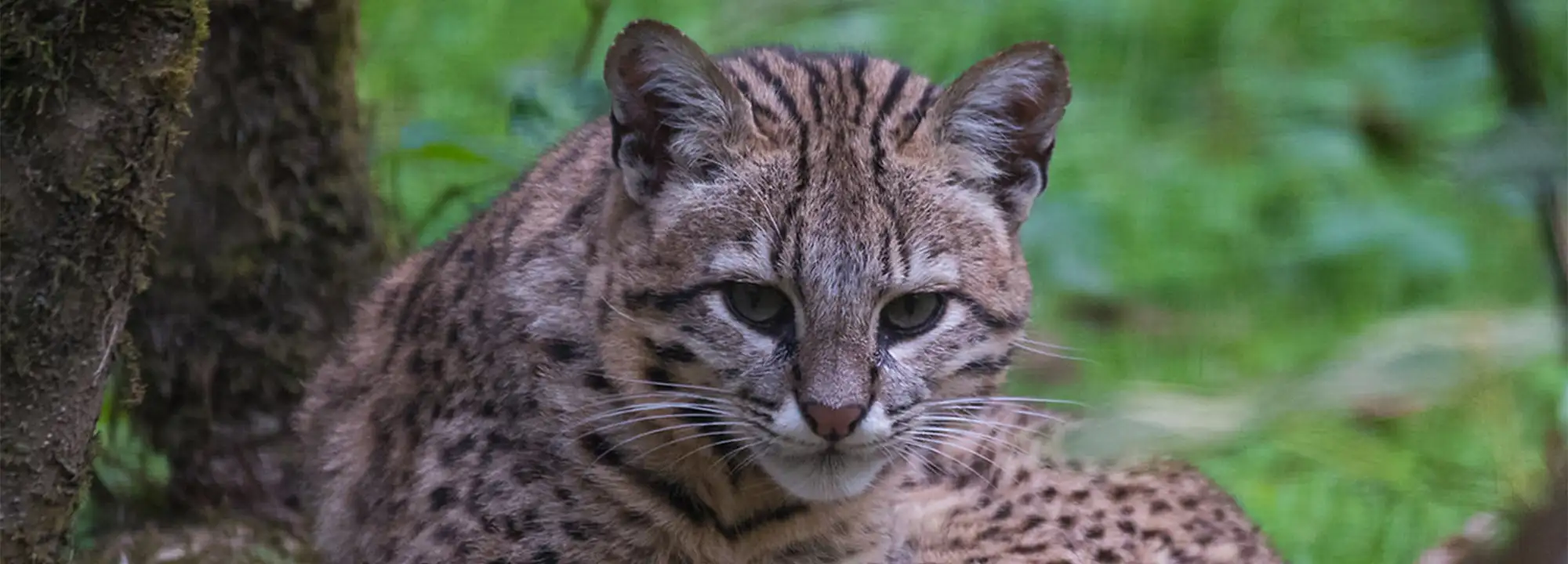
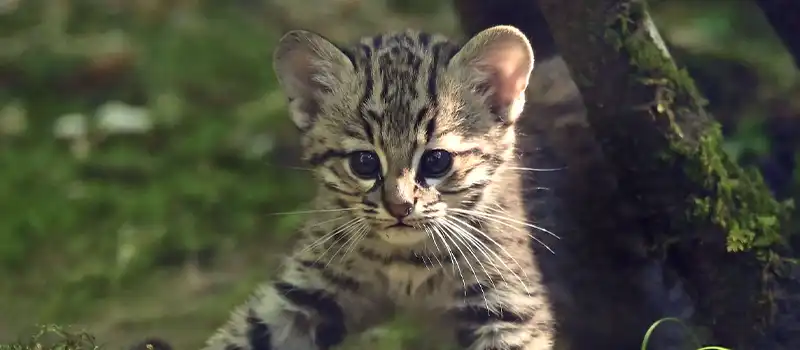
It measures between 55 and 70 cm in length, with a tail of 25 to 35 cm, and its weight varies between 3 and 7 kg, with males being slightly larger than females. Its coat is short and dense, and its color varies from pale gray to golden brown depending on the region. It is marked with round or oval black spots that can form more complex patterns on its back and flanks. Its tail, also spotted, often ends with a black tip. Its appearance is sometimes compared to that of the leopard cat, although it is smaller.
Diet
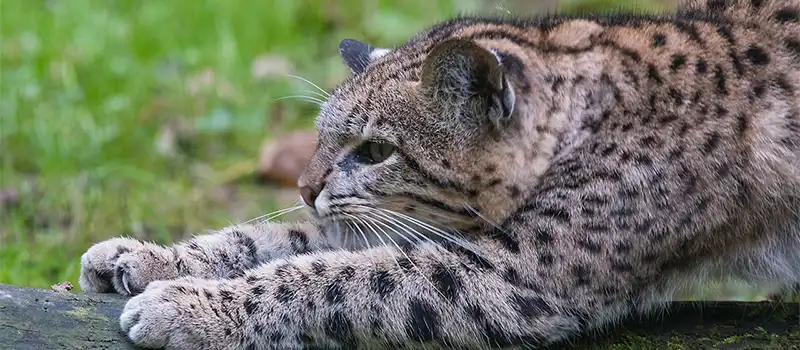
Geoffroy’s cat is a strict carnivore, feeding mainly on small mammals such as rodents, birds, reptiles, and sometimes insects. It is an opportunistic hunter, adapting its diet according to the availability of prey in its habitat. It generally hunts at night or at dusk, using its keen hearing and discretion to locate and capture its prey. It is also a good climber, which allows it to hunt in trees, but it often prefers to hunt on the ground.
Habitat and distribution
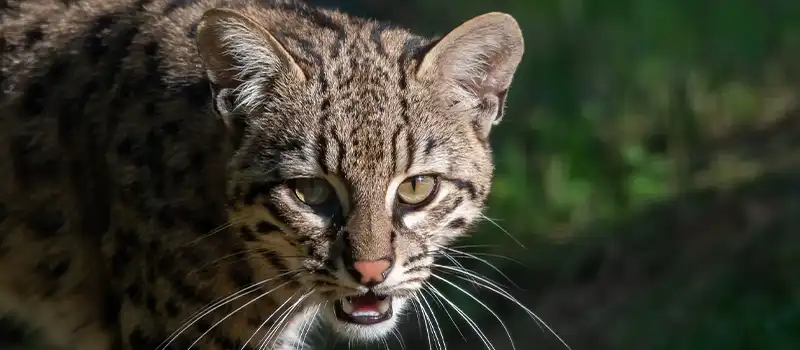
This feline lives in varied habitats, including subtropical forests, grasslands, wetlands and mountains, up to 3,800 meters in altitude. It is solitary and territorial, with each individual defending a home range that it marks with urine or scratches on trees. During the breeding season, males and females meet briefly, and the female gives birth to a litter of 1 to 3 young after a gestation of approximately 72 days. The young remain with their mother for several months before becoming independent.
Conservation and threats
Although Geoffroy’s cat is currently classified as “Least Concern” by the International Union for Conservation of Nature (IUCN), it faces several threats. The loss of its habitat due to agriculture and deforestation represents a major danger, as do conflicts with humans when it approaches inhabited areas.