Habitat and distribution
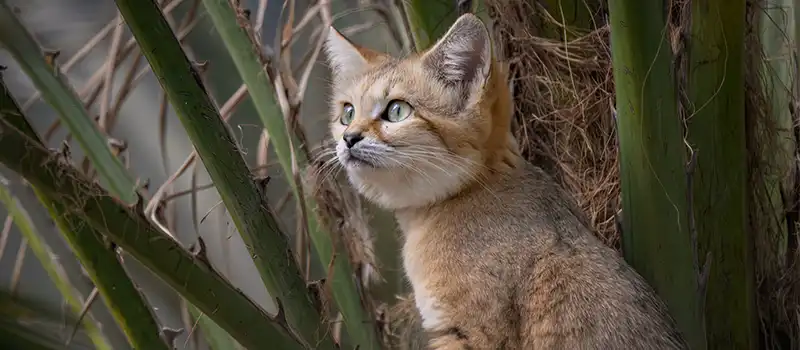
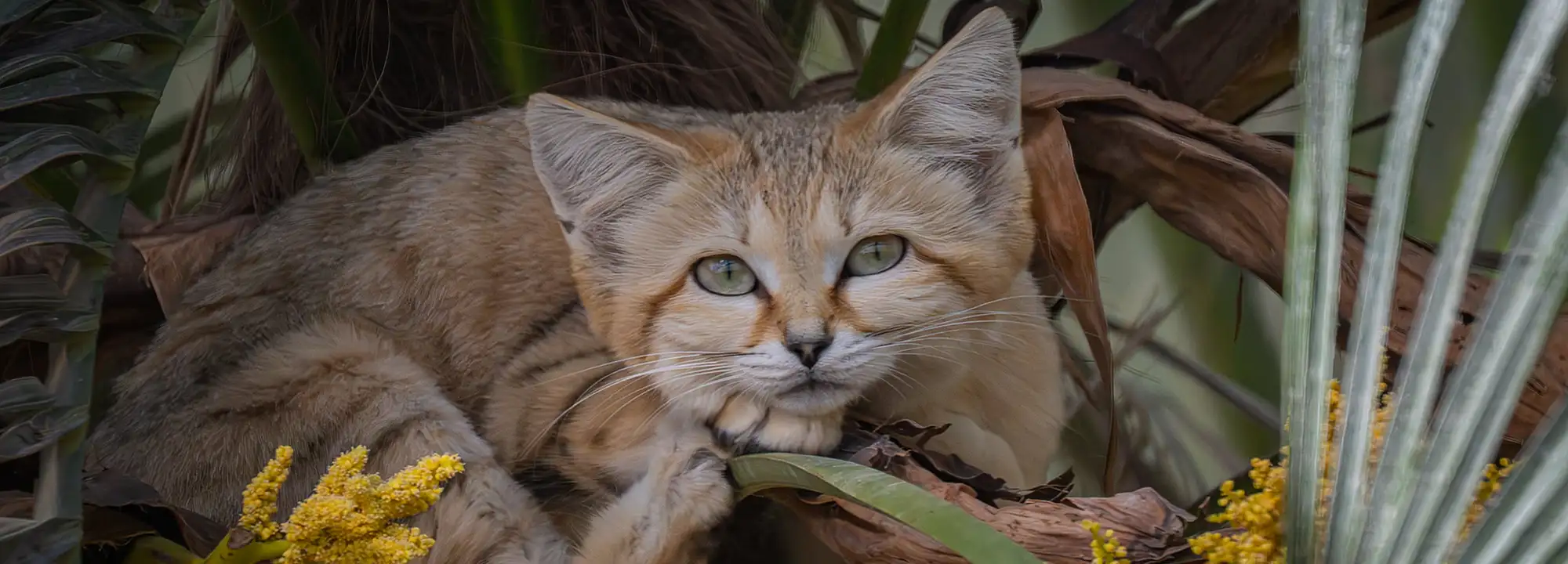
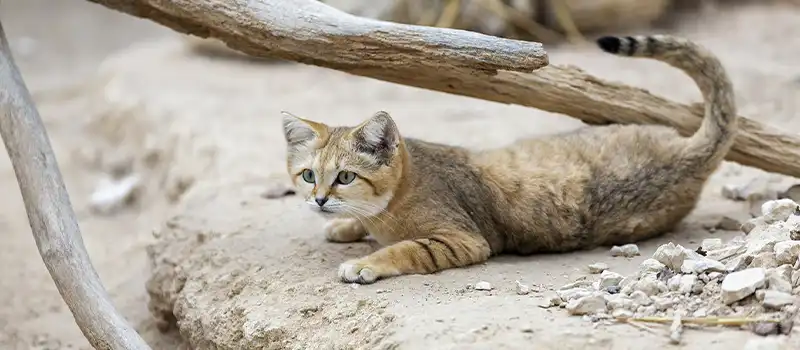
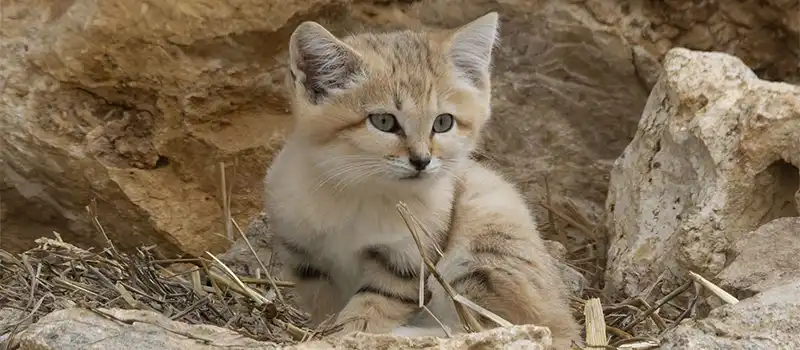
This feline is distinguished by its small size and robust appearance. Its dense coat, light beige to sand-colored, is scattered with darker stripes and spots, which help it camouflage itself in its desert habitat. Its large head is adorned with large triangular ears, which allow it to detect sounds at long distance, and its amber eyes give it a piercing gaze. Its paws, covered with thick hair, allow it to walk on hot sand without difficulty.
Size and weight
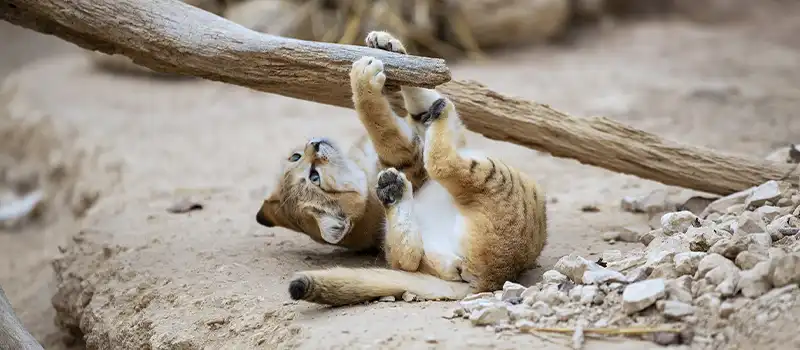
The Sand Cat measures approximately 40 to 50 cm in length, with a tail that can reach 30 cm. It weighs between 1.5 and 3.5 kg.
Behavior and reproduction
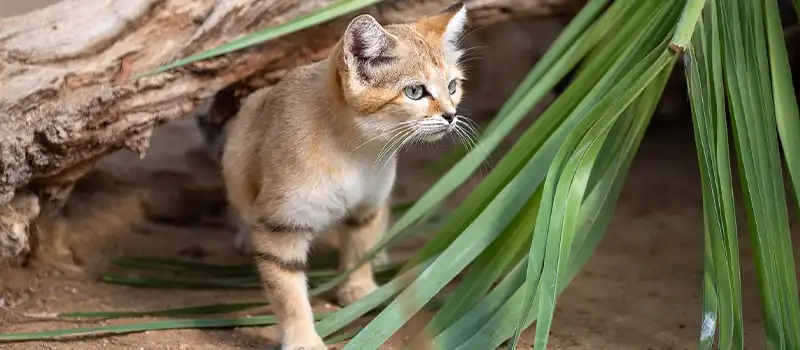
It is found in desert and semi-desert regions of North Africa, the Middle East and Central Asia, notably in the Sahara, the Arabian Peninsula and the deserts of Kazakhstan and Pakistan. Solitary and nocturnal, it spends the day sheltered in burrows to escape the heat, and comes out at night to hunt.
Diet
Carnivorous, the Sand Cat feeds mainly on small rodents, birds, reptiles and even insects. It is capable of surviving without drinking water, obtaining most of its hydration from its prey.
Conservation and threats
Although it is perfectly adapted to living in extreme conditions, the Sand Cat is threatened by habitat degradation, poaching and capture for illegal trade.