Wildcat
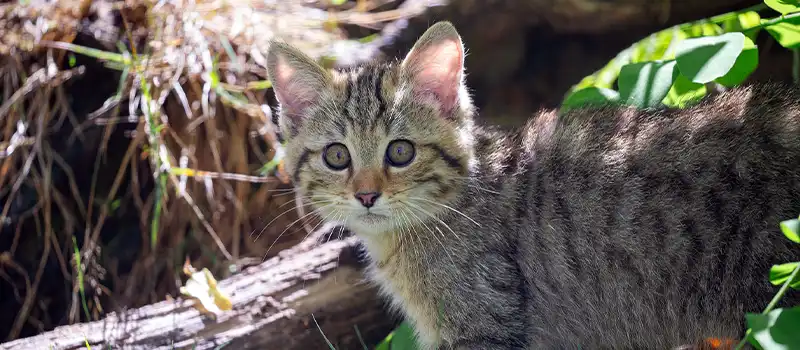
The wildcat, also called wild cat, is a discreet feline that inhabits mainly the forests of Europe, Western Asia and North Africa. Often confused with a tabby domestic cat, it is distinguished by its robust morphology and fierce behavior. This feline, emblematic of forest environments, is a solitary and territorial hunter.
Size and weight
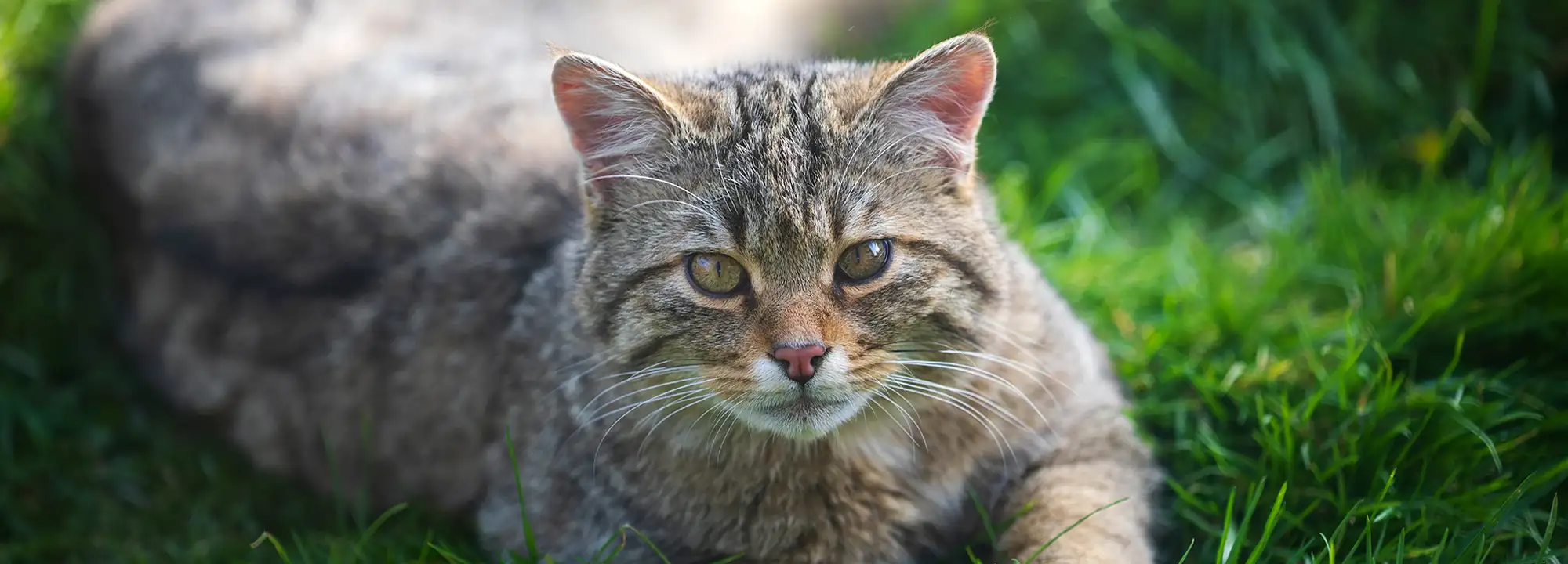
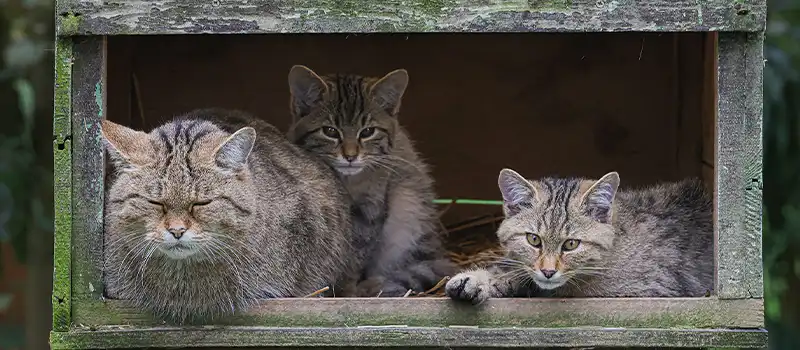
Its thick coat, ranging from gray to brown, is marked by dark stripes on the flanks, paws and tail. The latter, thick and rounded, is adorned with 2 to 4 black rings and a characteristic black tip. The wildcat measures between 45 and 80 cm long, including the tail, and weighs 3 to 8 kg, with males generally being larger than females. Unlike domestic cats, its body is more massive, and its head is wide with rounded ears.
Diet
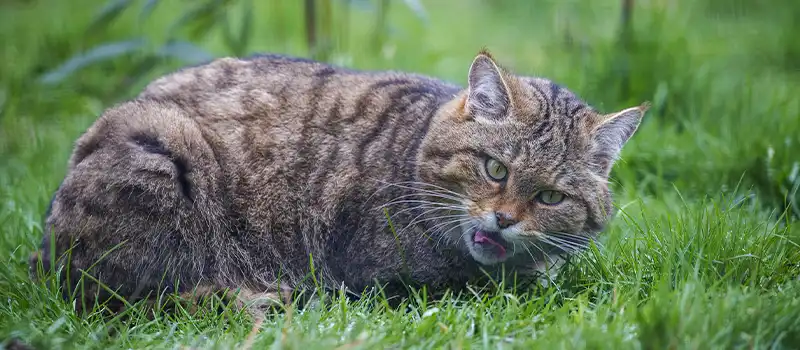
The wildcat is a strict carnivore, whose diet consists mainly of small mammals such as voles and mice, but also rabbits, birds and sometimes reptiles. Thanks to its highly developed hearing and sight, it is an efficient hunter, active mainly at dawn and dusk.
Habitat and distribution
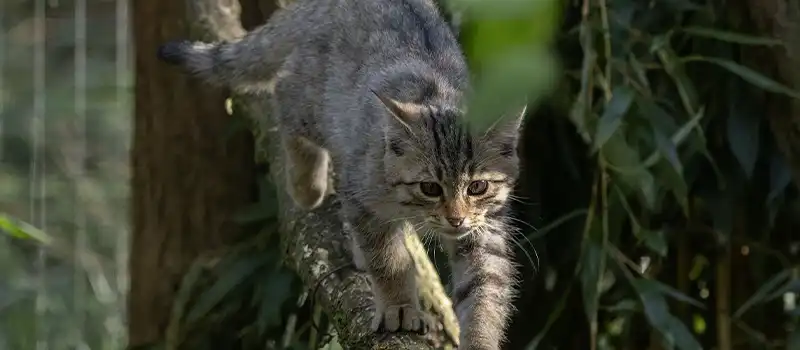
It lives in mixed or deciduous forests, where it finds both abundant prey and shelters to rest or raise its young. It generally avoids inhabited areas and prefers calm and isolated environments. This feline is territorial: males and females only meet during the breeding season, and young leave their mother after a few months.
Conservation and threats
Although it is classified as “Least Concern” by the International Union for Conservation of Nature (IUCN), the wildcat is threatened in some regions by habitat fragmentation, road collisions, poaching and especially hybridization with domestic cats, which endanger the genetic purity of the species.