
Fishing Cat
The fishing cat, also called the Asian palm civet cat, is a unique semi-aquatic feline, perfectly adapted to its lifestyle around wetland areas. It is found in marshes, mangroves, rivers and lakes in South and Southeast Asia, particularly in India, Sri Lanka, Bangladesh, Thailand and Indonesia. This remarkable feline is a specialized hunter that depends heavily on aquatic ecosystems for its survival.

Size and weight
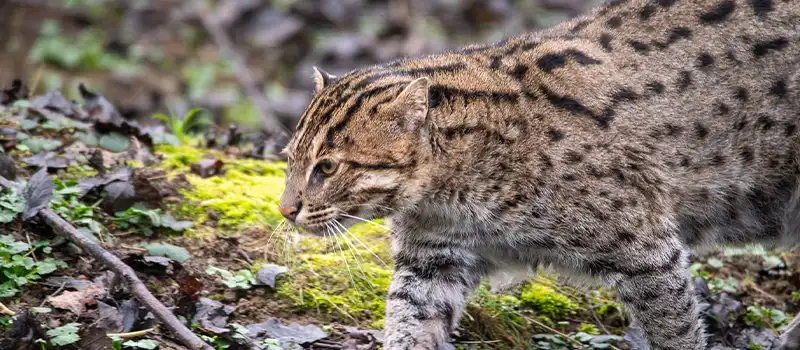
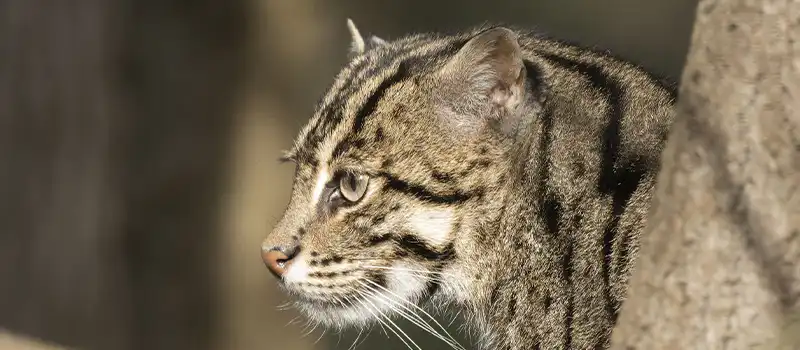
Medium-sized, the fishing cat measures between 75 and 120 cm in length (including tail), with a weight varying from 6 to 16 kg, with males being noticeably larger than females. Its olive-gray coat is marked with black spots that form longitudinal lines on its back, providing it with excellent camouflage in tall grasses and shadows of marshy areas. Its tail is short, often marked with dark bands. Its large partially webbed paws and slightly modified retractable claws allow it to swim with agility, a rare characteristic among felines.
Diet
As its name suggests, the fishing cat is an expert in aquatic hunting. Its diet consists mainly of fish, which it catches with precision thanks to impressive techniques, such as sweeping the water with its paws to project its prey out of the water. It also consumes crustaceans, amphibians, aquatic birds and, occasionally, small mammals. Capable of diving and swimming long distances, it is perfectly at ease in water, an unusual trait among felines.
Behavior and reproduction
This feline is generally solitary and territorial. It marks its home range, which can extend over several square kilometers, using scratching and urine spraying. Active mainly at night and at dusk, it remains difficult to observe in its natural environment.
Conservation and threats
The fishing cat is today classified as “Vulnerable” by the International Union for Conservation of Nature (IUCN), as it faces numerous threats. The destruction of wetlands, pollution of waterways, conversion of mangroves into agricultural or industrial land, as well as conflicts with humans over predation on domestic fish, have severely reduced its populations. Furthermore, poaching for its fur and local beliefs contribute to its decline.