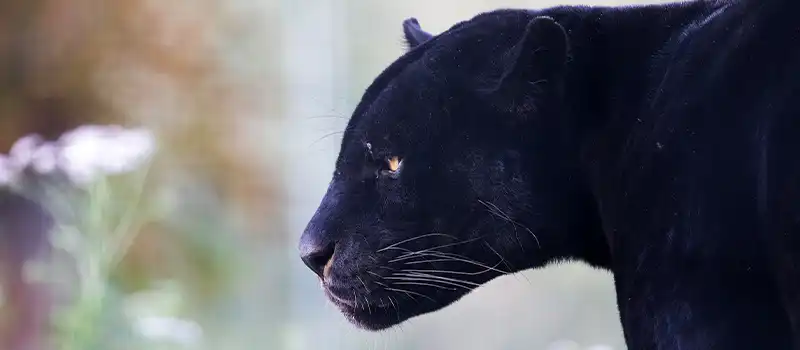
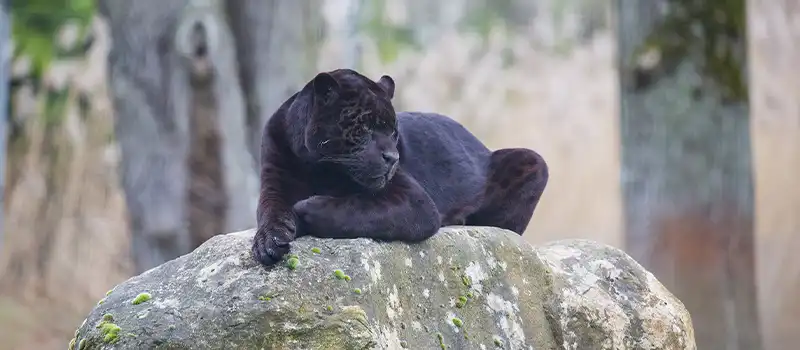
Black jaguar
The black jaguar is not a distinct species, but a variant of the jaguar (*Panthera onca*) displaying black coloration due to melanism, a genetic mutation causing overproduction of dark pigments. This phenotype is relatively rare and affects approximately 10% of jaguars, primarily observed in the Amazon and dense tropical forests. Under intense light, the characteristic rosette patterns of the species sometimes remain visible through its dark coat.
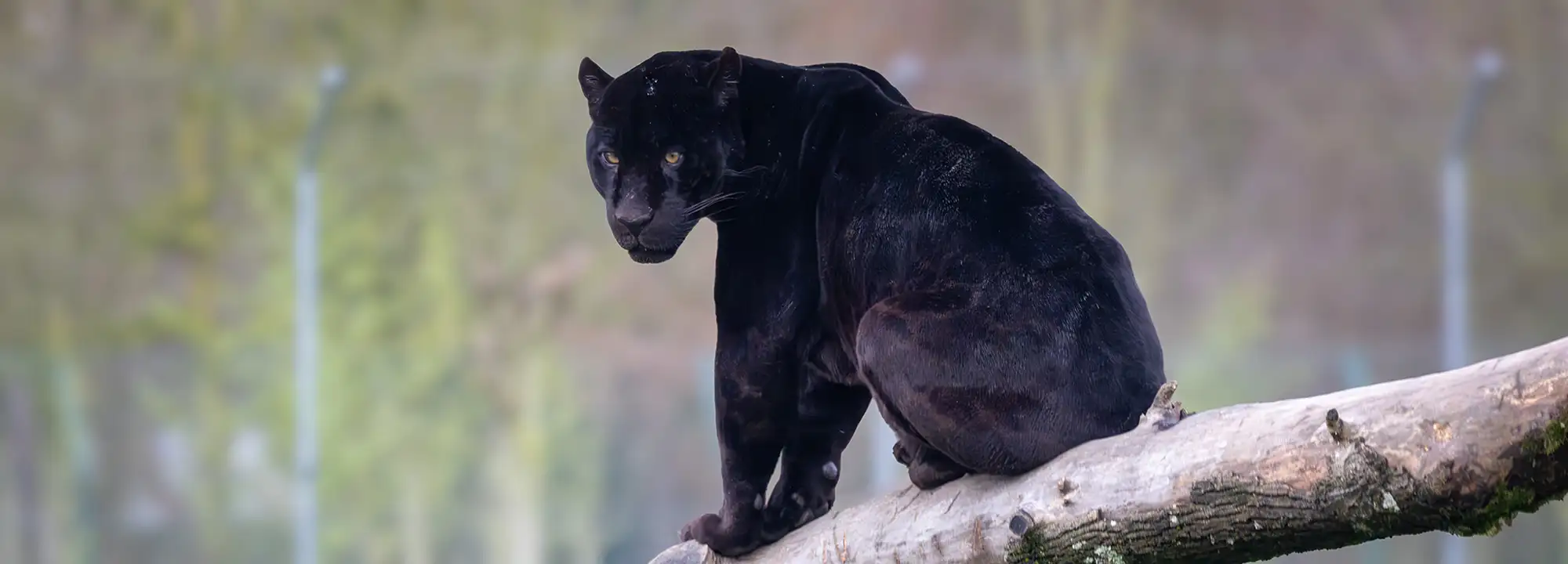
Size and weight
This impressive feline generally measures between 1.2 and 1.9 meters, tail included, and can weigh from 45 to 100 kg, with males being more imposing than females. It retains the robust and muscular silhouette of its species, with a wide head and powerful jaws capable of crushing the bones of its prey.
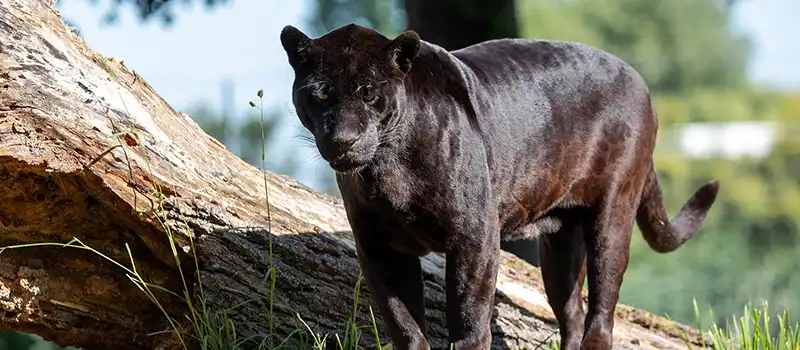
Diet
An opportunistic predator and strict carnivore, the black jaguar feeds on a wide variety of animals depending on its habitat: cervids, capybaras, monkeys, birds, turtles and even caimans. Unlike most felines, it sometimes hunts in water and does not hesitate to cross rivers swimming to reach its prey. Its dark coat provides it with an advantage in dense tropical forests, where it blends perfectly into the shadows.
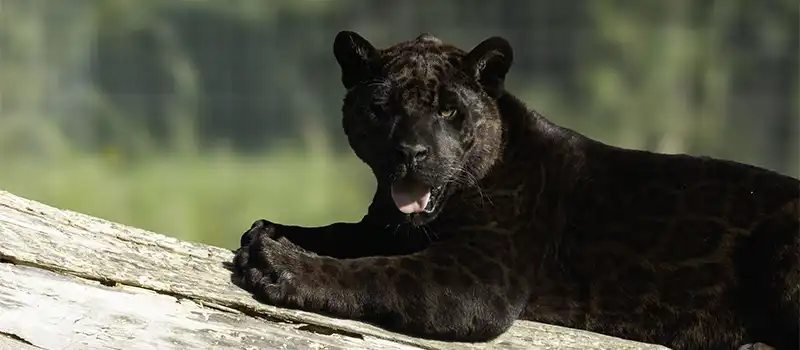
Habitat and distribution
The black jaguar evolves mainly in the dense jungles of Central and South America, particularly in the Amazon, the Pantanal and the forests of Belize or Guatemala. Although it prefers humid and wooded environments, it can also frequent wetland areas and savannas. Like all jaguars, it is solitary and territorial, marking its domain through scratches, urine and powerful vocalizations.
Conservation and threats
This phenotype is not directly threatened, but the survival of the jaguar as a species is in peril due to deforestation, poaching and conflicts with livestock farmers. The fragmentation of its habitat reduces its populations and makes its conservation paramount.