Physical description
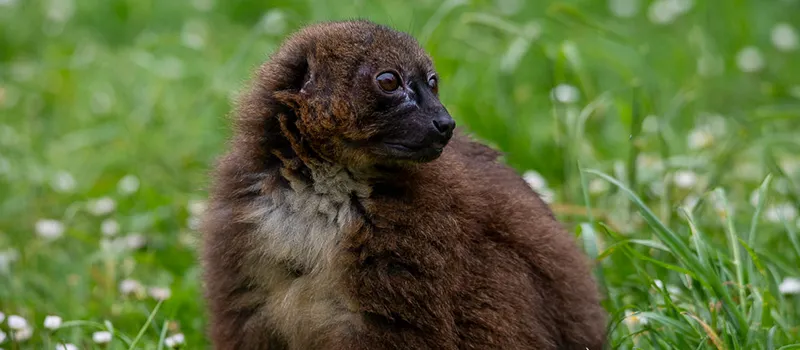
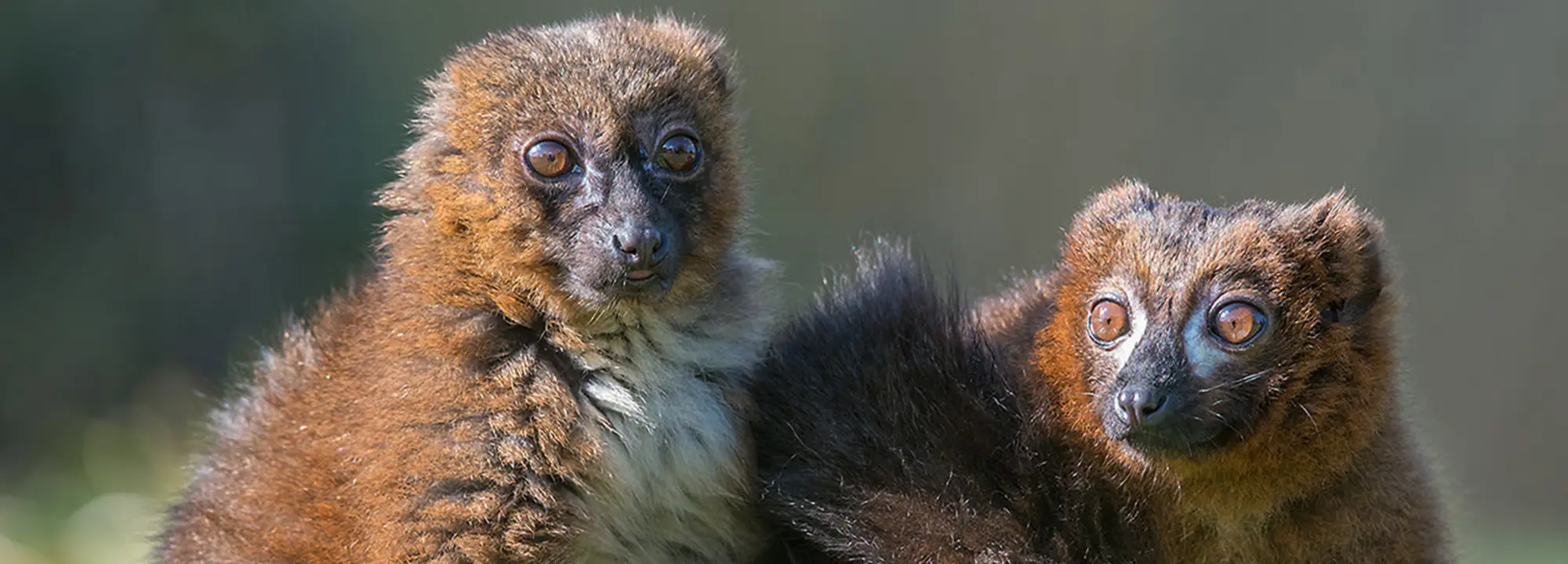
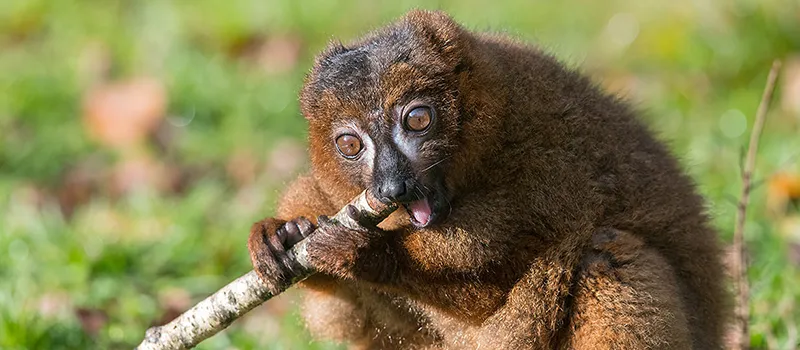
Its back is covered with brown-gray fur, while its belly displays a reddish hue that is more or less pronounced. Its head is marked by a dark mask around the eyes, which contrasts with its lighter forehead. Its long tail, although not prehensile, serves as a balancer during its movements in the trees.
Habitat and distribution
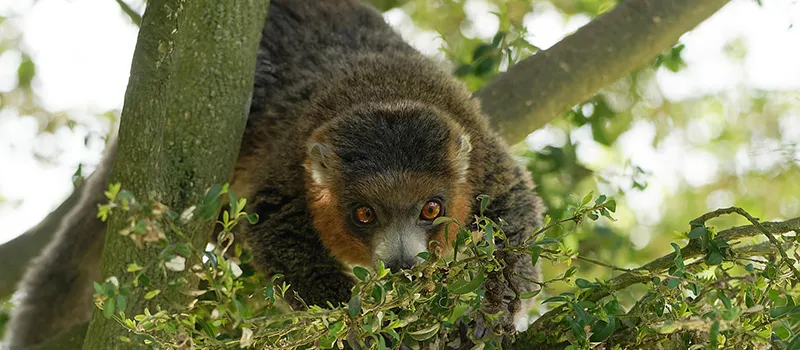
This lemur measures approximately 35 to 40 cm, with a tail reaching 45 to 50 cm. Its weight varies between 1.5 and 2 kg. It is essentially arboreal and adopts a discreet lifestyle, moving with agility in the canopy.
Habitat and distribution
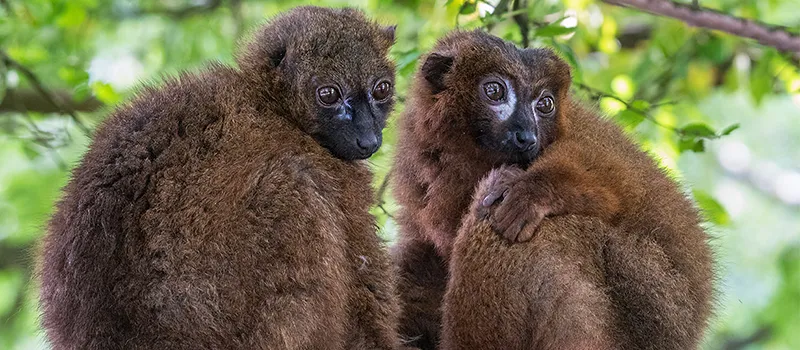
It is found in the humid forests of eastern Madagascar, where it lives in small family groups. Like many lemurs, it exhibits a social hierarchy dominated by females, who play a central role in the organization of the group.
Diet
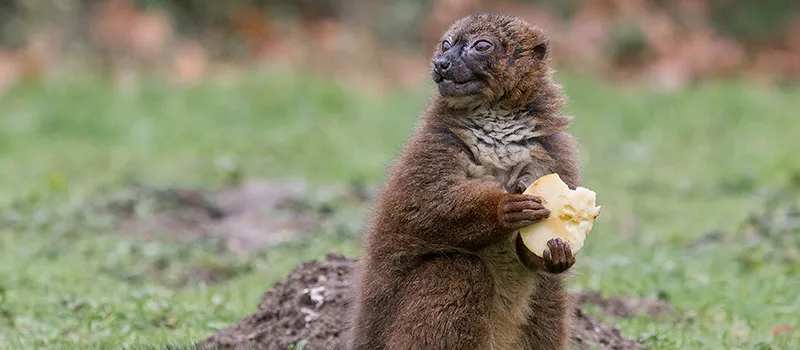
Its diet is mainly frugivorous, but it also consumes leaves, flowers and nectar. It thus contributes to the regeneration of forests by dispersing the seeds it ingests.
Conservation and threats
The red-bellied lemur is threatened by deforestation and habitat fragmentation, mainly due to agriculture and forestry exploitation. It is also hunted in certain regions.