Presentation
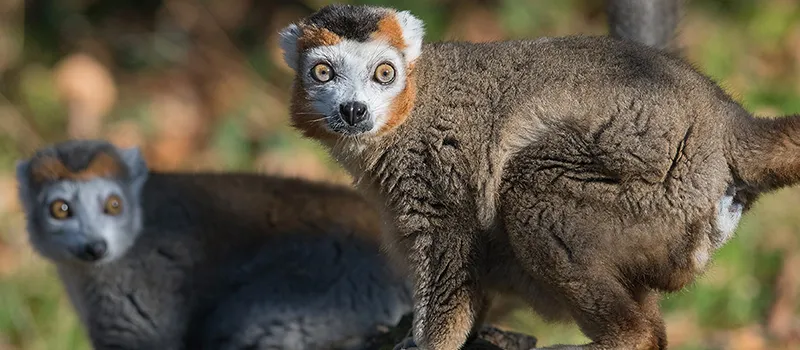
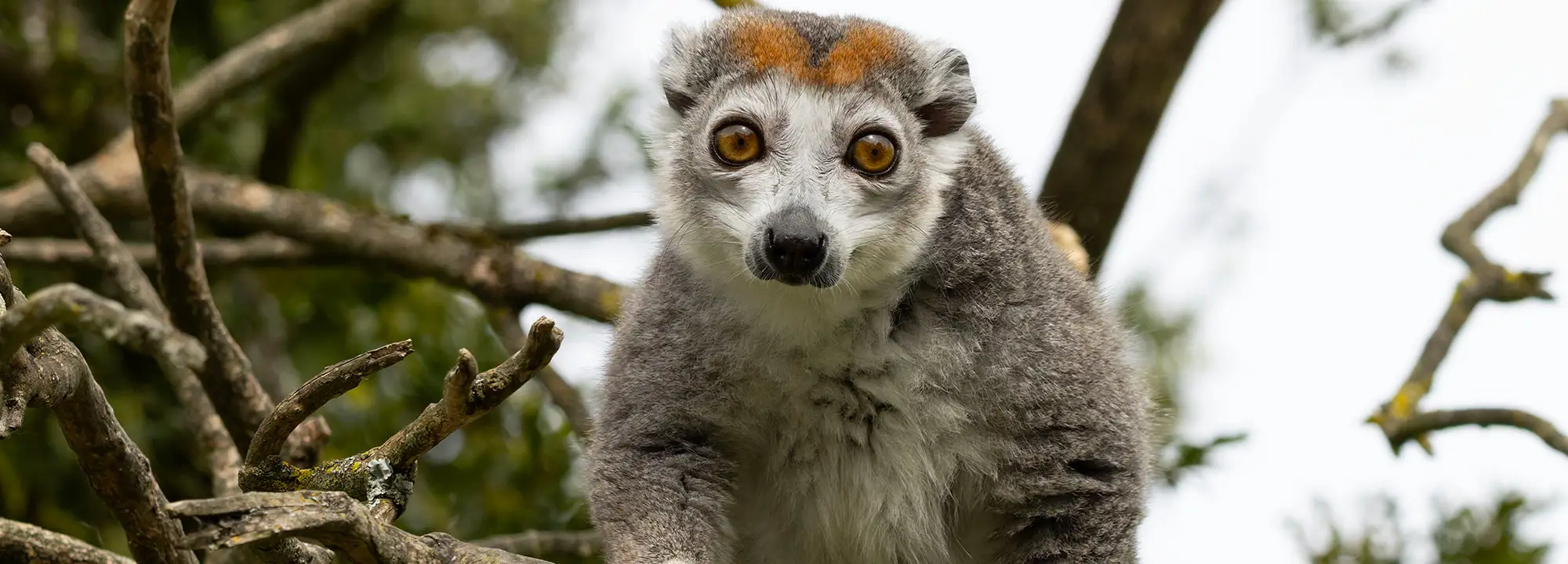
The Crowned Lemur is a primate endemic to Madagascar belonging to the Lemuridae family. Its name comes from the distinctive crown-shaped pattern on its forehead, which gives it an elegant and unique appearance among lemurs.
Physical Description
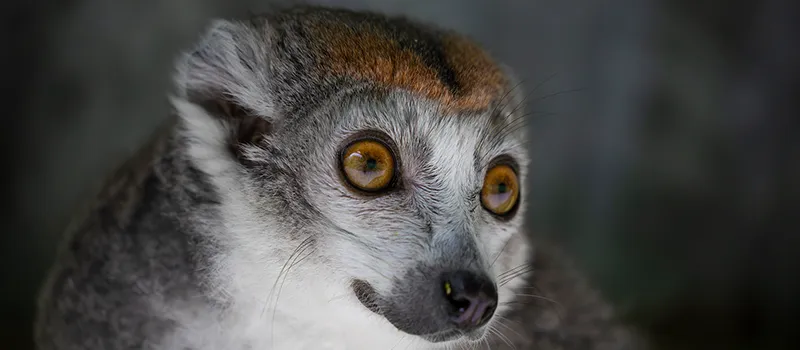
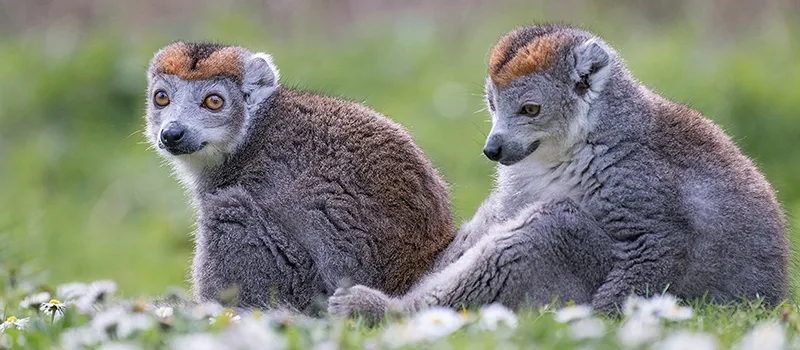
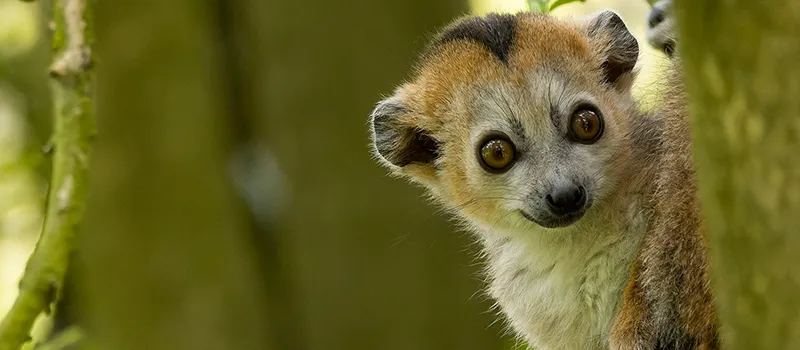
This lemur exhibits marked sexual dimorphism: Males display gray-brown fur, with a black head and an orange crown on top of the skull. Females, on the other hand, have lighter fur, generally reddish-brown, with a grayish face and a more discreet crown.
Habitat and Distribution
The Crowned Lemur measures approximately 35 to 40 cm, with a long and bushy tail that can reach 45 cm. Its weight varies between 1.2 and 1.6 kg. Its tail, although not prehensile, serves as balance when it moves with agility through the canopy.
Habitat and Distribution
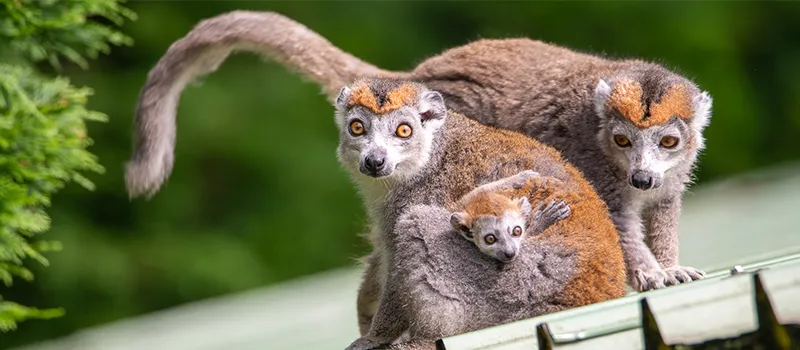
It lives mainly in the dry forests of northern Madagascar, particularly in the Ankarana region and the Amber Mountain. This primate is diurnal and arboreal, evolving in small social groups of 4 to 8 individuals led by dominant females, as is often the case among lemurs.
Diet
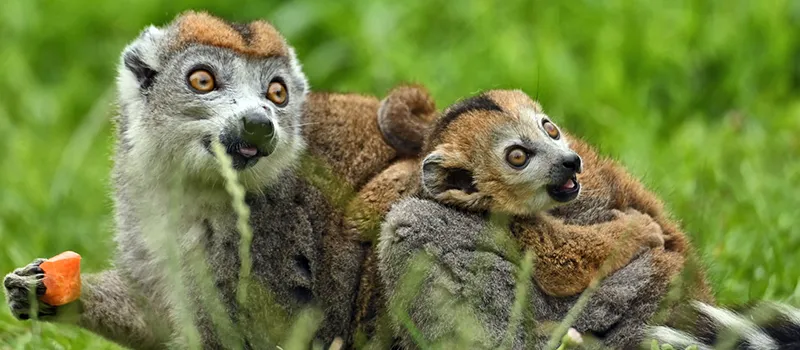
Its diet is frugivorous, although it also consumes leaves, flowers, nectar and occasionally insects. As a seed disperser, it plays a key role in maintaining the biodiversity of Malagasy forests.
Conservation and Threats
The Crowned Lemur is threatened by deforestation, hunting and habitat fragmentation.