Maned Wolves
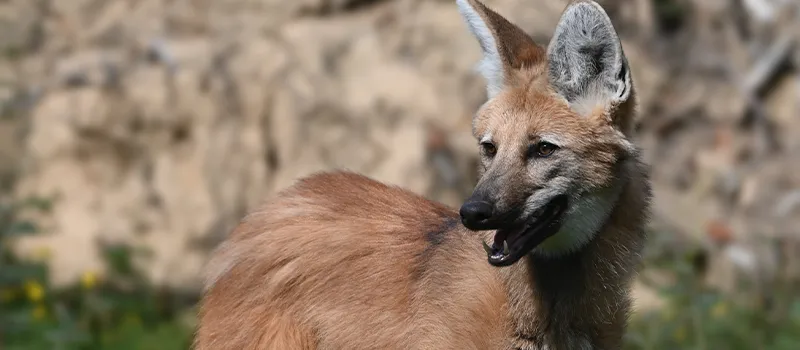
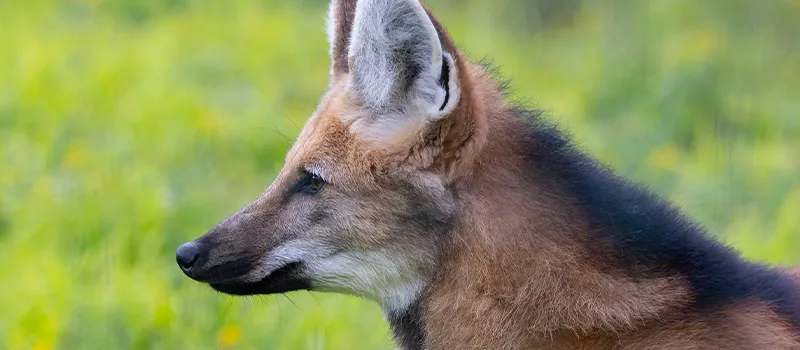
The maned wolf is a unique canid, native to the vast plains of South America, particularly Brazil, Paraguay, Bolivia, and northern Argentina. Although it bears the name “wolf,” it is neither a true wolf nor a fox, but a species in its own right within the canid family. Its slender silhouette, long thin legs, and thick black mane make it an animal with a physique as surprising as it is elegant.

Size and weight
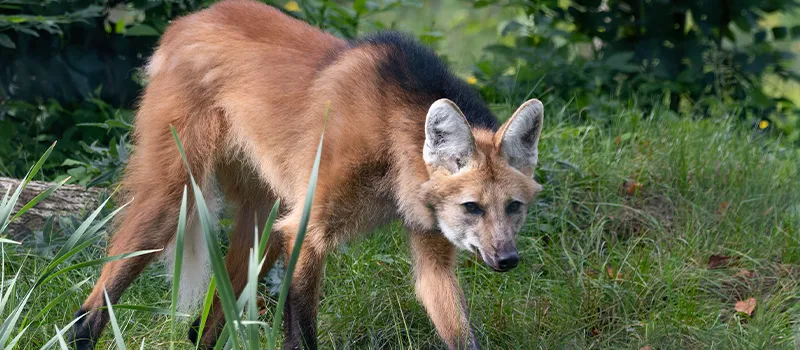
It measures between 75 and 90 cm at the shoulder, weighing between 20 and 30 kg. Its tall, long-legged stature allows it to move easily through the tall grasses of the savanna. Its coat, a flaming reddish color, contrasts with its black legs, white throat, and dark mane that bristles when it feels threatened.
Diet
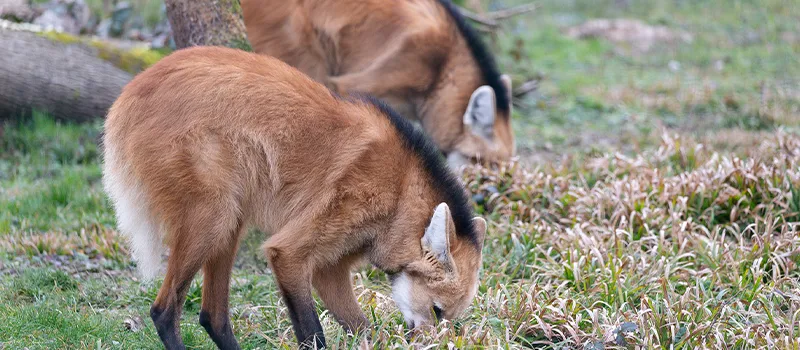
The maned wolf is a solitary and crepuscular animal, moving alone across vast territories. Its diet is omnivorous: it consumes small mammals, birds, or insects as well as fruits, including the famous lobeira, nicknamed the “wolf fruit.” This varied diet plays an important ecological role, as it contributes to seed dispersal in its natural habitat.
Behavior and reproduction
Rather discreet and non-aggressive, the maned wolf communicates using deep vocalizations called “roar-barks” and marks its territory with urine sprays that have a very distinctive scent.
Conservation and threats
Threatened by habitat fragmentation and road collisions, it now benefits from protective measures in several South American countries. A symbol of South American wildlife, this canid with its dignified bearing fascinates with its atypical appearance and discreet way of life.