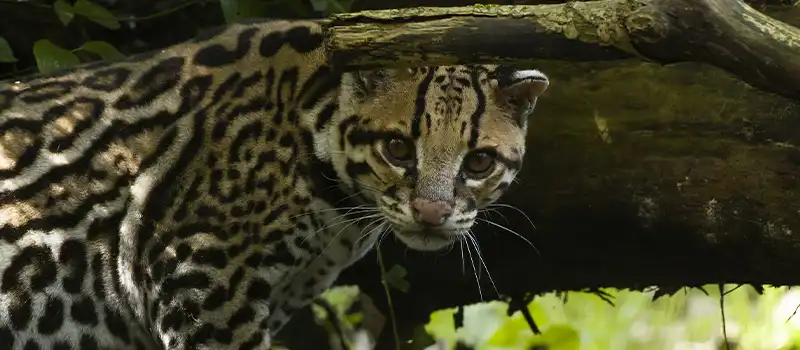
Ocelot
The ocelot is a medium-sized feline native to the tropical and subtropical forests of Central and South America, as well as low-altitude regions from Mexico to Peru and the Brazilian Amazon. This elegant and nocturnal predator is one of the most emblematic felines of Latin America.
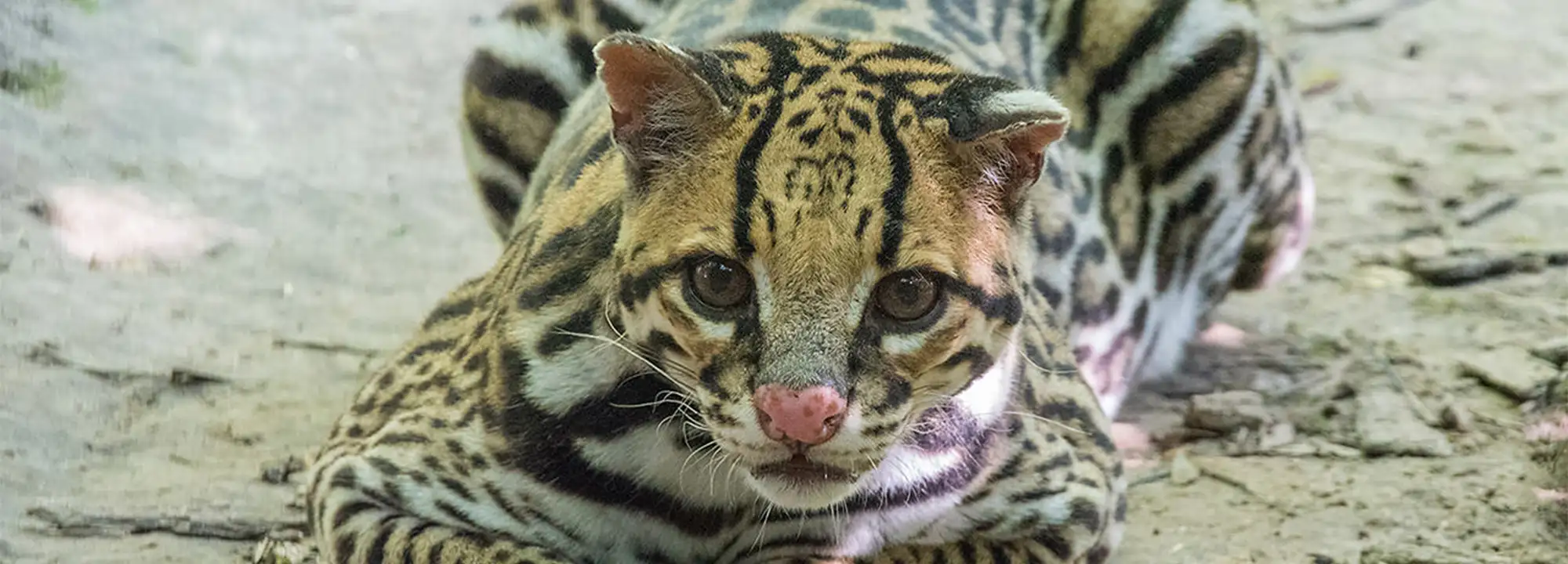
Size and weight
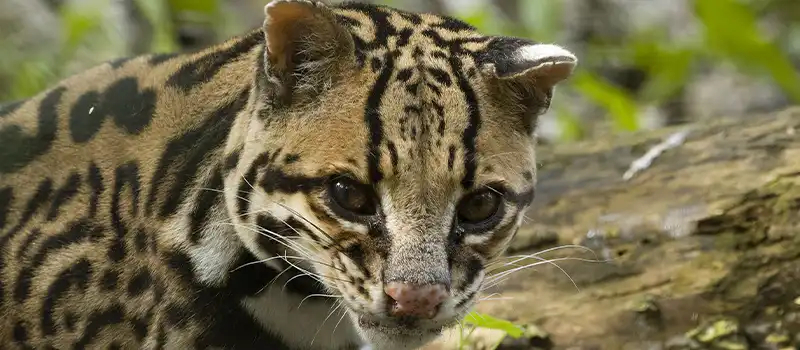
Its coat is one of its most distinctive features: with a base color ranging from golden yellow to gray, it is covered with numerous black rosettes and dark spots, creating a unique pattern that allows it to camouflage itself in the forest undergrowth. With a body length varying from 55 to 85 cm, and a tail of 30 to 45 cm, the ocelot weighs between 8 and 16 kg, making it a medium-sized feline, smaller than the jaguarundi but larger than the tiger cat. Its silhouette is slender, with short limbs and a relatively long tail, which allows it to balance its movements in trees and on the ground.
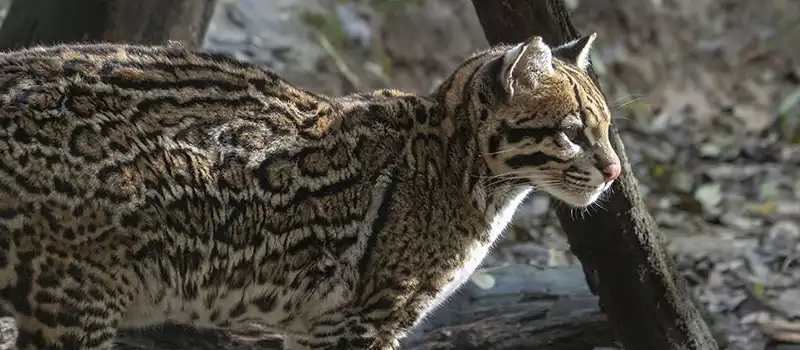
Diet
The ocelot is a carnivorous and opportunistic predator, feeding mainly on small mammals such as monkeys, rodents, marsupials and birds, but it can also attack reptiles or amphibians. This feline is renowned for its ability to hunt both on the ground and in trees. Its keen hearing and night vision allow it to track its prey effectively in the darkness of the jungle. It also uses its discretion and agility to slip through dense vegetation.
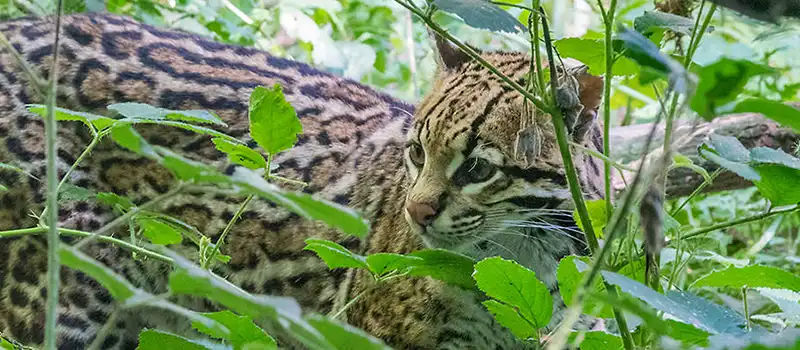
Habitat and distribution
The ocelot lives mainly in humid tropical forests, savannas and mangrove areas, but is also found in more open habitats, such as mountainous regions and grasslands. It is a solitary animal that lives on a territory which it marks with urine, scratches and feces. It is particularly active at night, although it can sometimes be spotted at dusk or dawn.
Conservation and threats
Although the ocelot is classified as “Least Concern” by the International Union for Conservation of Nature (IUCN), it faces several threats. Massive deforestation, the expansion of agricultural land and urbanization are major causes of the loss of its natural habitat.