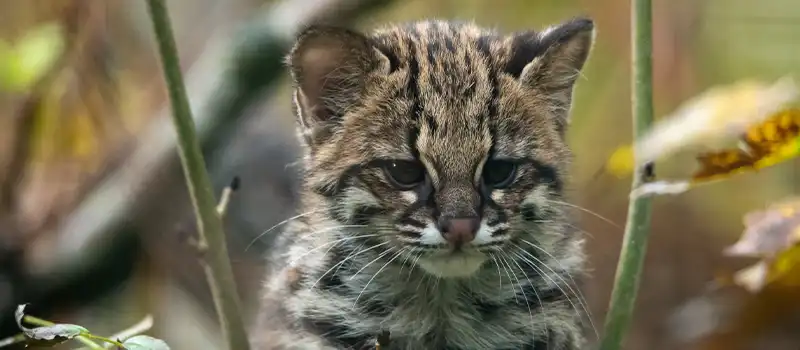
Southern Tiger Cat
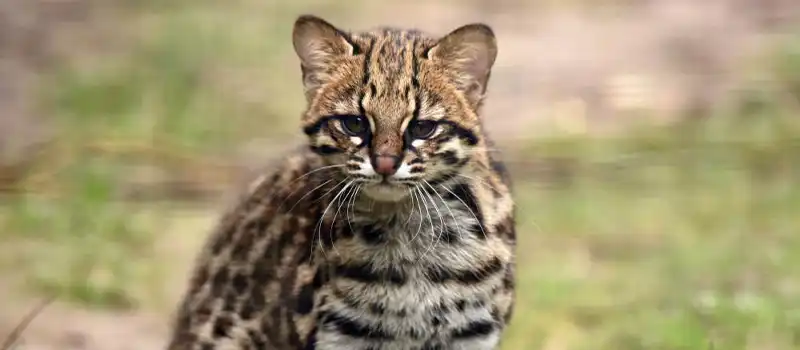
The Southern Tiger Cat, also called the Southern spotted cat, is a small rare and discreet feline that inhabits mainly humid tropical forests and mountainous areas of southern Brazil, Argentina and Paraguay. This elegant predator, whose habits are still relatively little known, is a true symbol of South American fauna.
Habitat and distribution
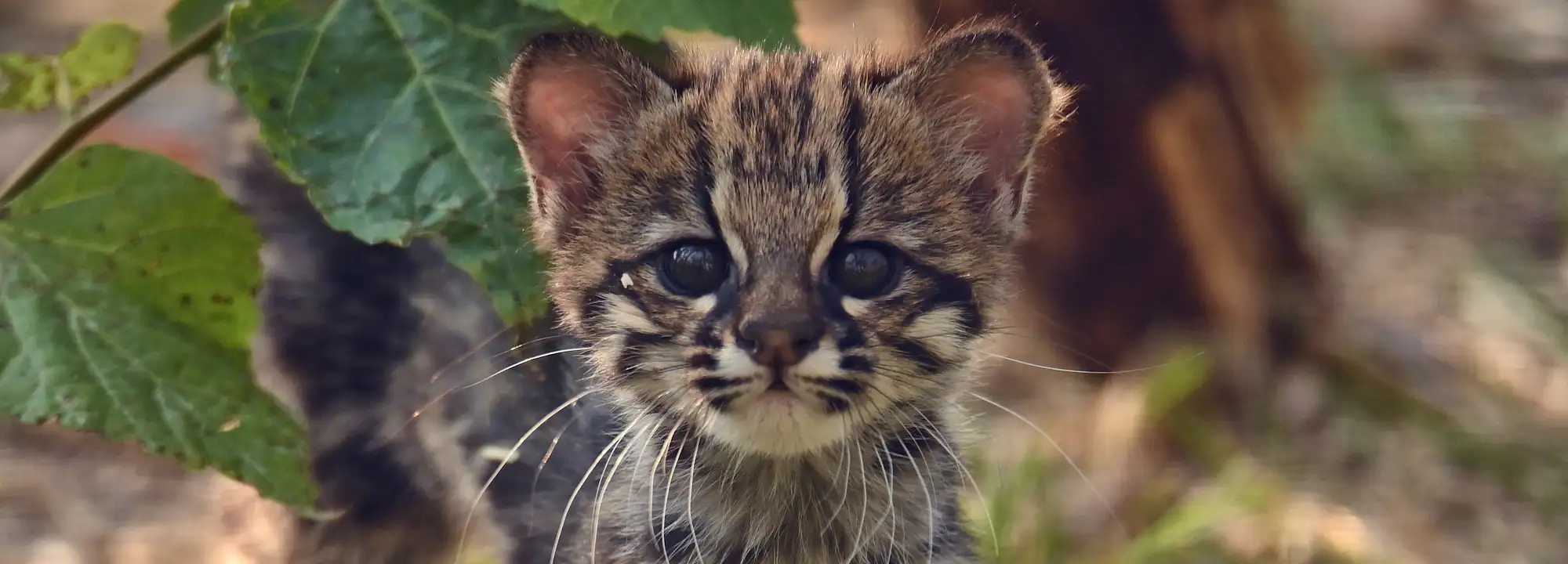
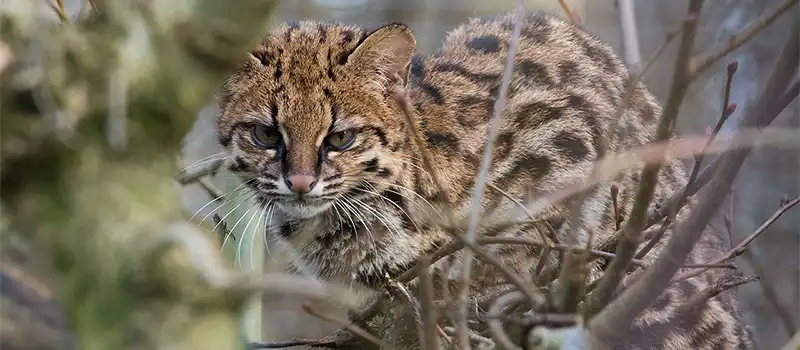
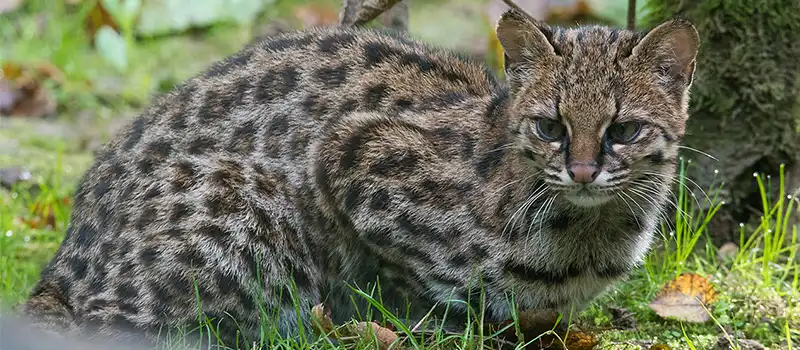
Its coat is light tan to grayish in color, adorned with numerous rounded or rosette-shaped black spots. These markings, which cover the entire body, allow it to camouflage effectively in dense and leafy environments. Its modest size, with a body length of approximately 50 to 70 cm and a weight varying from 2.5 to 4 kg, makes it one of the smallest felines in South America. Its tail is quite long, with black rings that help it maintain balance when climbing trees or moving through its natural habitat.
Habitat and distribution
The Southern Tiger Cat is a nocturnal and solitary hunter, feeding mainly on small mammals, birds, reptiles and insects. Thanks to its agility and climbing ability, it can hunt both on the ground and in trees, where it captures its prey using discretion and speed. Its keen hearing and night vision allow it to locate its prey in the twilight of the forest.
Habitat and distribution
It lives in tropical, subtropical forests and mountains, dense ecosystems that are difficult to access, where it finds both abundant prey and hiding places. The Southern Tiger Cat is a solitary species that establishes territories which it marks using scratches and urine. Very little information exists about its social behaviors, but it appears to have seasonal reproduction with litters of two to three young.
Conservation and threats
Classified as “Near Threatened” by the International Union for the Conservation of Nature (IUCN), the Southern Tiger Cat faces significant threats, such as deforestation, loss of its natural habitat and illegal hunting for its fur.