Habitat and distribution
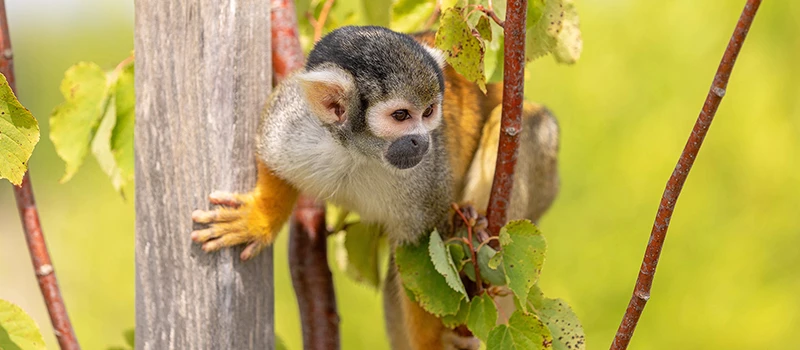
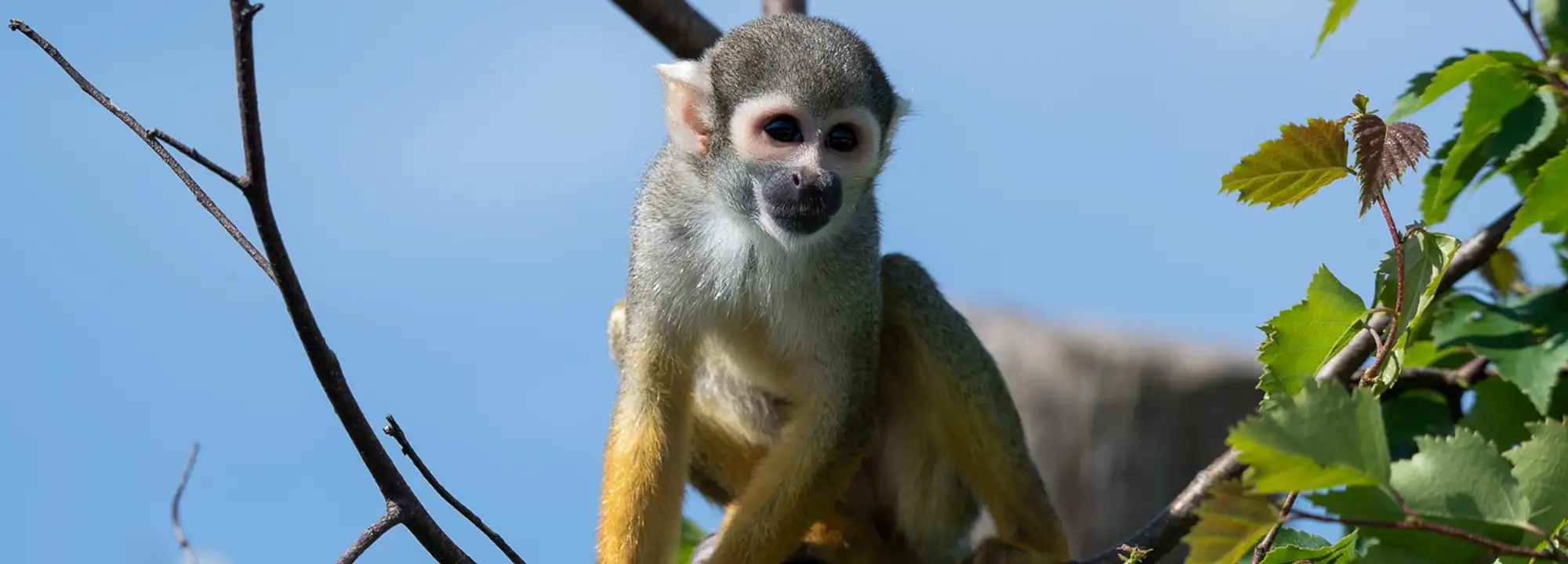
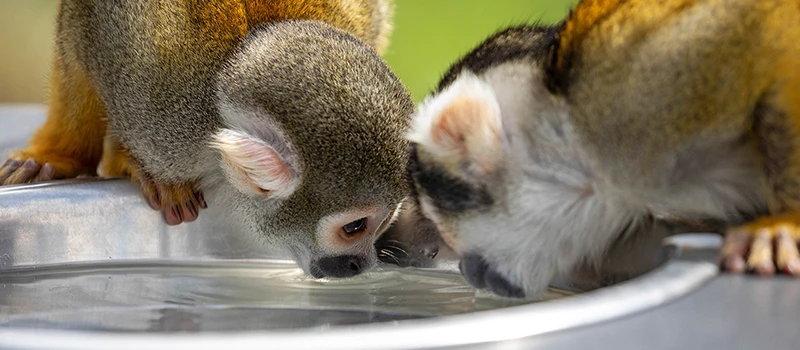
Its fur is predominantly golden yellow on the limbs and back, while its belly is lighter, ranging from cream to white. Its head displays a distinctive facial mask, with gray and black tones contrasting with its large expressive eyes. Its tail, long and non-prehensile, serves mainly as a balancer during its acrobatic movements in the canopy.
Size and weight
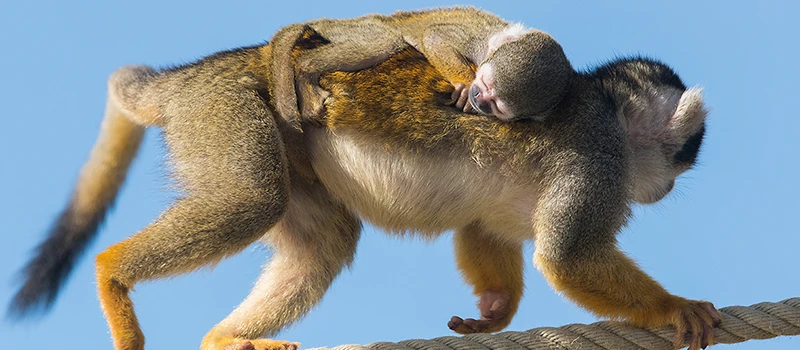
The Peruvian Squirrel Monkey measures approximately 25 to 35 cm, with a tail that can reach 35 to 42 cm. It weighs on average between 700 and 1,200 grams, with males and females showing a slight difference in size, males being generally more robust.
Habitat and distribution
It is found mainly in the humid tropical forests of the Amazon basin, particularly in Peru, Ecuador, and western Brazil. This primate is diurnal and arboreal, living in social groups that can number several dozen individuals. These groups are very dynamic and use a wide range of vocalizations to communicate, warn of danger, or coordinate their movements.

Diet
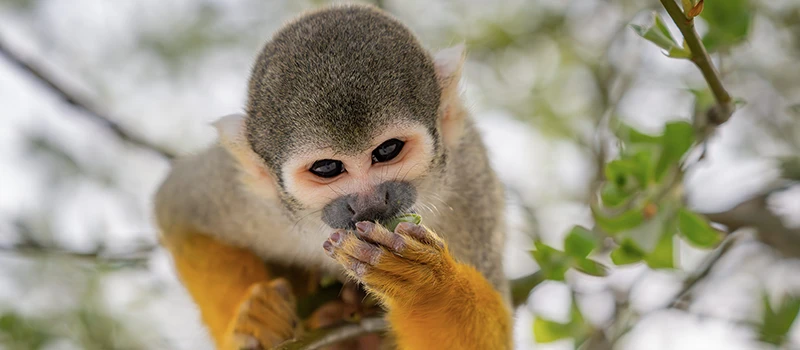
The Peruvian Squirrel Monkey is omnivorous, feeding mainly on fruits, seeds, insects, small vertebrates, and nectar. It plays a fundamental ecological role in dispersing seeds, thus contributing to the renewal of the forest.
Conservation and threats
Although its conservation status is currently less concerning than other primates, it is threatened by deforestation, hunting, and illegal trade.