Serval
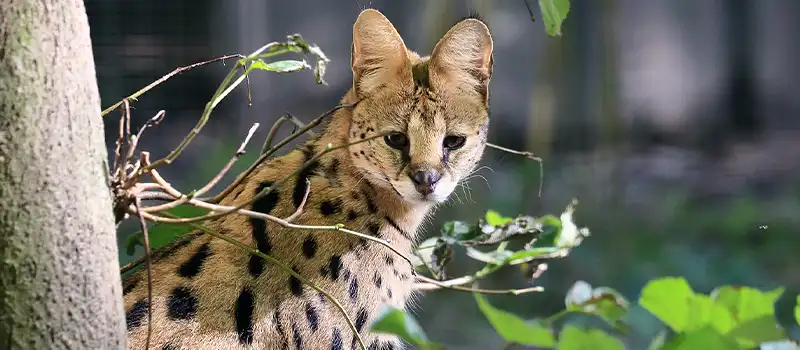
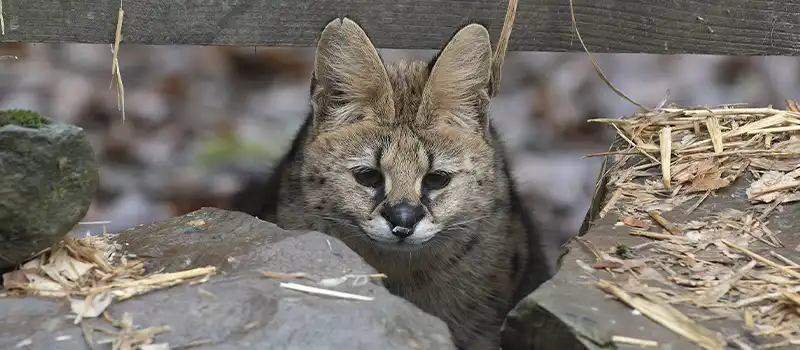
The serval is a medium-sized feline native to Africa, where it mainly occupies savannas and wetlands. With its slender appearance and long legs, it is perfectly adapted for hunting in tall grass and marshy environments. Recognizable by its tawny coat spotted with black and its large rounded ears, the serval is an agile and efficient predator, often nicknamed the “marsh cat”.
Size and weight
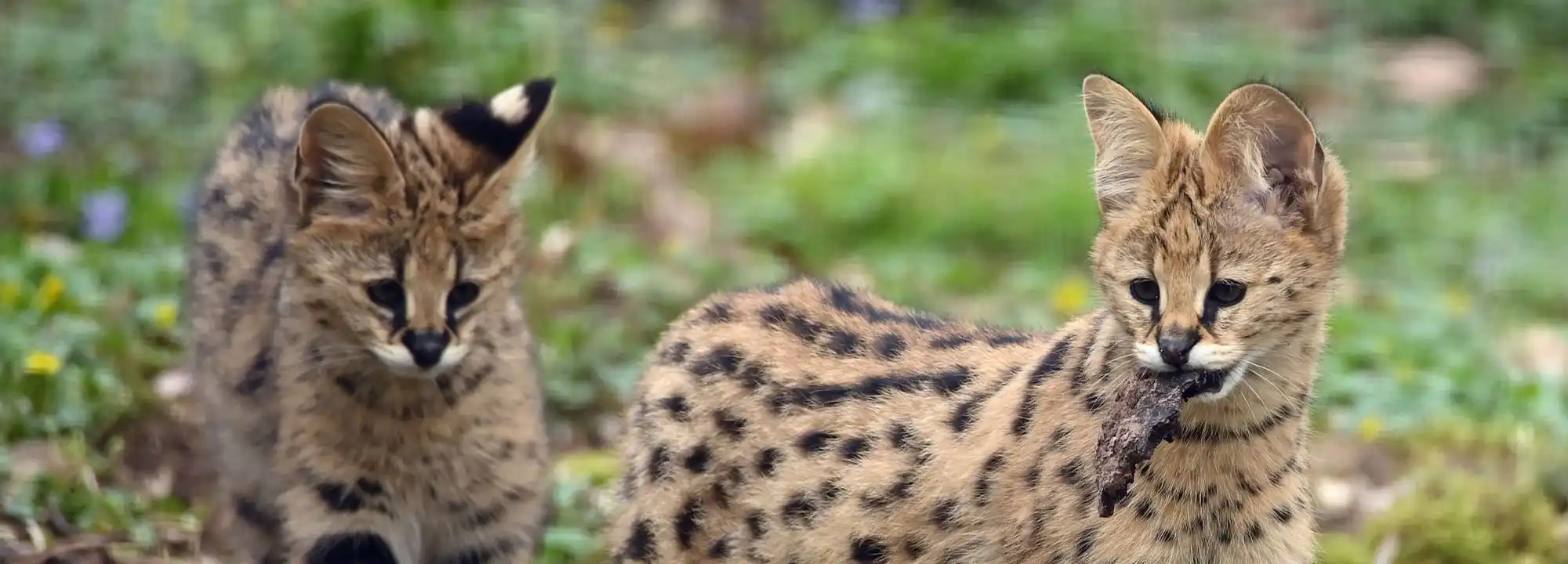
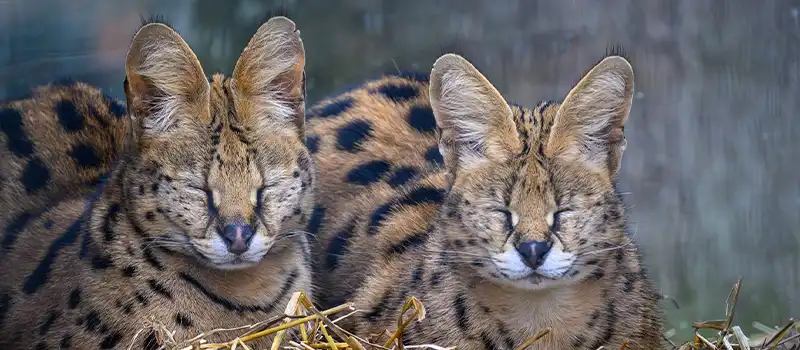
It measures between 85 and 110 cm in length, not counting its tail which reaches approximately 30 to 40 cm. It weighs 9 to 18 kg, with males being slightly larger than females. Its morphology is unique among felines: its long hind legs, proportionally the longest in the feline family, give it great agility and an impressive ability to jump up to 3 meters to catch birds in flight. Its coat is light tawny, marked with black spots and stripes on the head, neck and back, which provides it with excellent camouflage in tall grass.
Diet
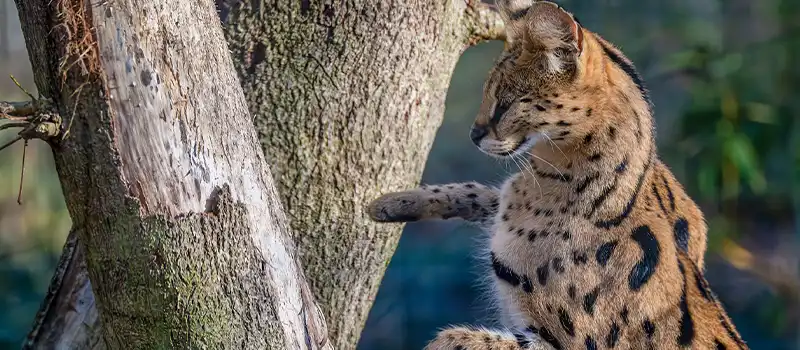
The serval is a strict carnivore, feeding mainly on small mammals such as rodents, which make up approximately 80% of its diet. It also hunts birds, amphibians, reptiles and sometimes insects. Its large ears allow it to locate its prey through extremely developed hearing. It hunts mainly at dawn and dusk, using its discretion and spectacular jumps to surprise its prey.
Habitat and distribution
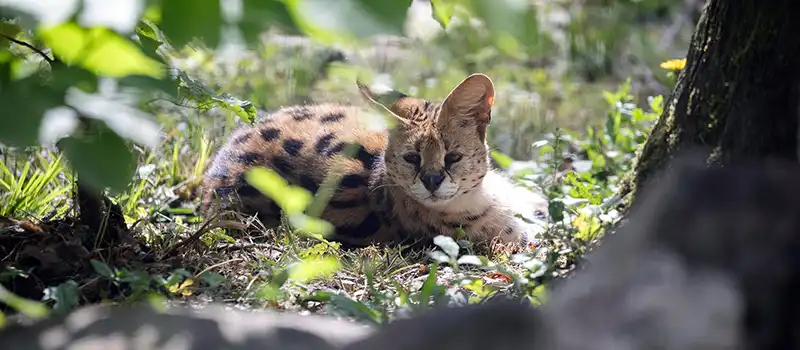
It lives in a wide variety of habitats, but prefers savannas, marshy areas and grasslands near watercourses, where it finds an abundance of prey. It avoids deserts and dense forests. This feline is solitary and territorial, marking its domain with urine and vocalizations. Males have larger territories that may overlap those of several females. Reproduction can occur at any time of year, and after a gestation of approximately 74 days, the female gives birth to a litter of 2 to 4 young.
Conservation and threats
Although the serval is currently classified as “Least Concern” by the International Union for Conservation of Nature (IUCN), it is threatened by habitat destruction due to agriculture, urbanization and drainage of wetlands. It is also hunted for its skin, used in the manufacture of clothing or accessories, as well as for illegal exotic animal trade.
Presentation
The Lumigny Safari Reserve is among the rare European parks that contribute to raising public awareness about the preservation of servals in captivity and in the wild. Through these efforts, the serval remains a fascinating species that plays a crucial role in the balance of African ecosystems by controlling populations of small animals.