White Tiger
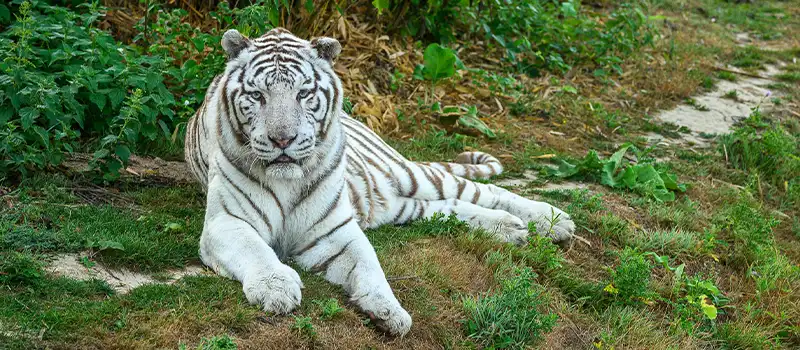
The white tiger is a rare variant of the tiger, generally of the Bengal tiger (Panthera tigris tigris) or, more exceptionally, of the Siberian tiger (Panthera tigris altaica). This exceptional appearance results from a recessive genetic mutation known as leucism, which causes depigmentation of the coat while maintaining the distinctive black stripes of tigers. White tigers are not albinos: they still possess pigments in their stripes and eyes, which are often blue.
Size and weight
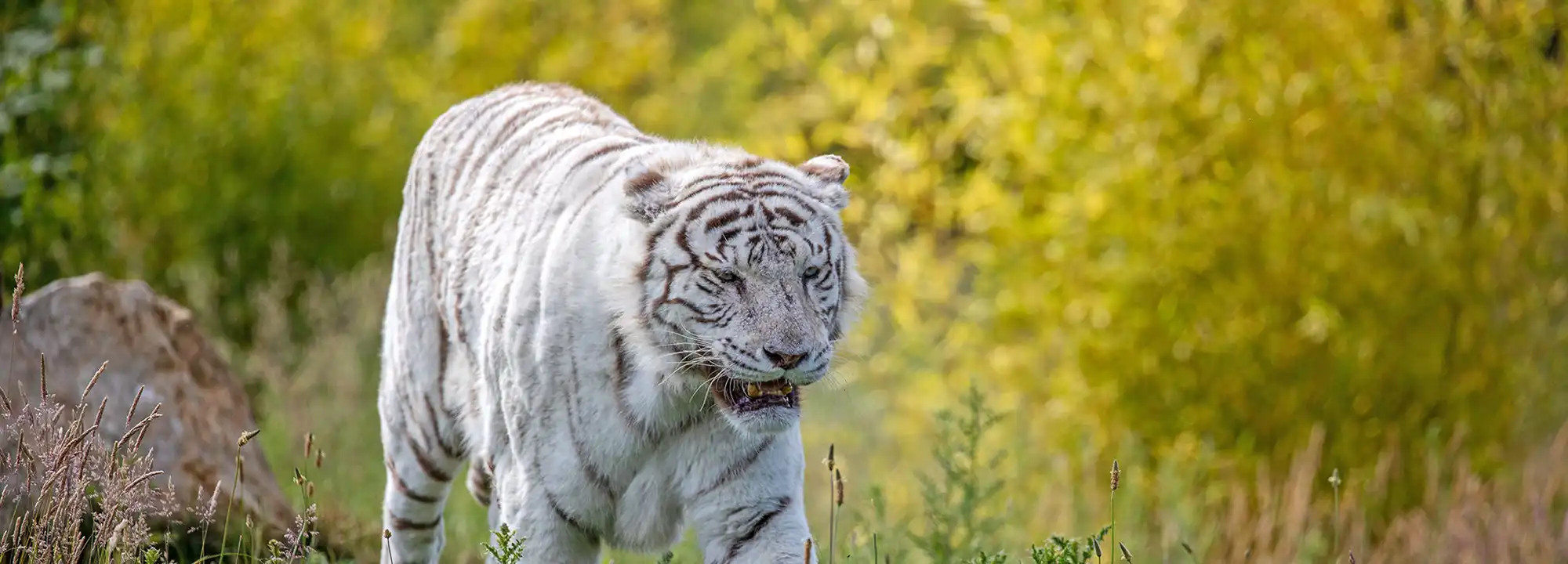
White tigers are similar in size to classic orange tigers. Males measure between 2.70 and 3.30 meters, including the tail, and can weigh up to 300 kg, while females, which are smaller, weigh between 120 and 180 kg. Their cream-white coat marked with black or dark gray stripes gives them a majestic and spectacular appearance, but this coloration makes them less camouflaged in their natural environment, which can represent a disadvantage in the wild.
Physical description
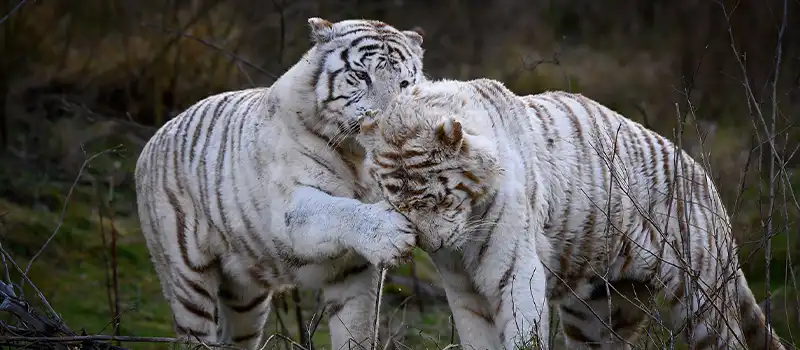
Like their orange counterparts, white tigers are strict carnivores, feeding on large prey such as deer, wild boar, bovids, and sometimes smaller animals such as monkeys or birds. They hunt by ambush, approaching their prey silently before pouncing to attack. Their powerful jaws and sharp claws make them formidable predators.