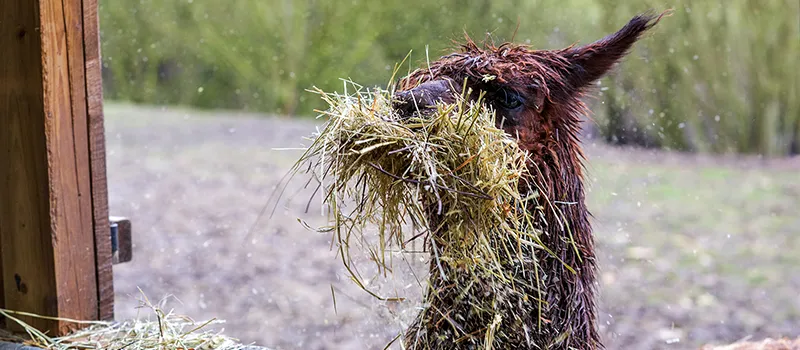
Alpaca
The alpaca is a domestic mammal belonging to the camelid family, just like the llama. Originating from the Andean regions of South America, it is primarily raised for the exceptional quality of its wool, highly prized in the textile industry. Smaller in size and more compact in physique than the llama, the alpaca measures between 80 and 100 cm at the withers and weighs between 55 and 90 kg. It is distinguished by its robust body, its long slender neck and its rounded head, adorned with large upright ears and an expressive gaze.
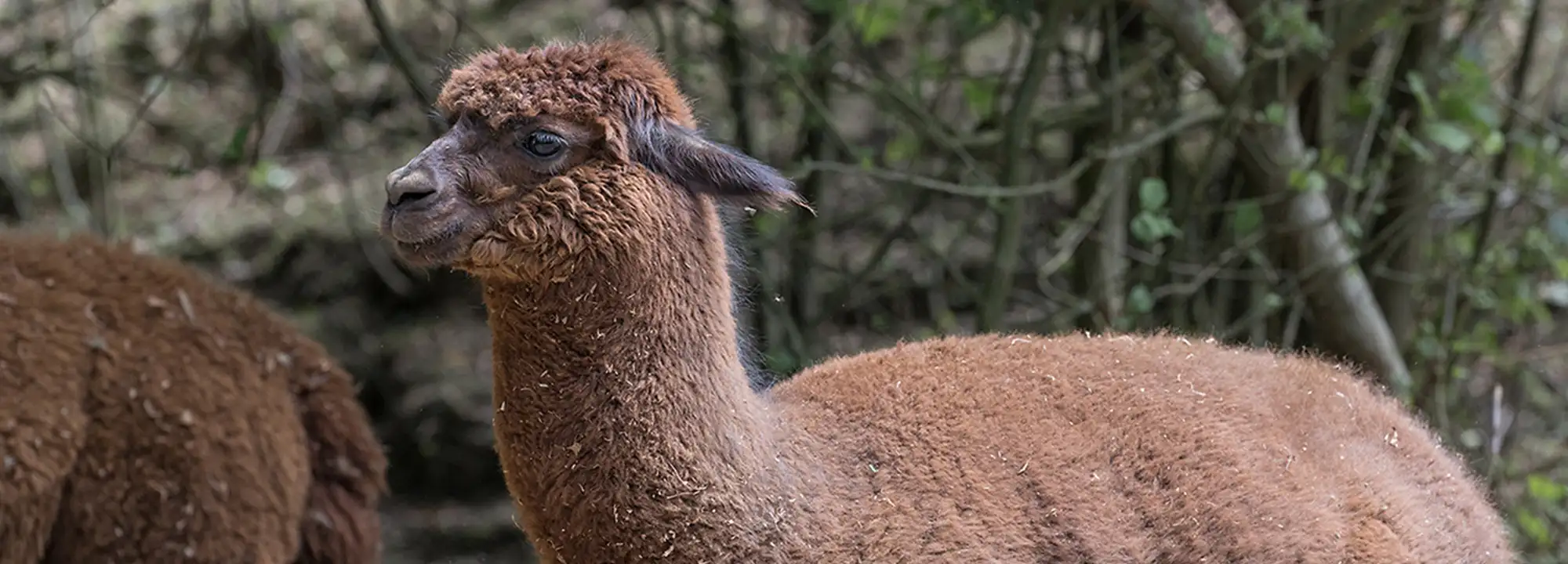
Physical description
Its coat is particularly dense and silky, allowing it to resist the extreme climatic conditions of high altitudes. Alpaca wool is renowned for its fineness, softness and thermoregulatory properties. It comes in a wide range of natural colors, ranging from white to black, passing through different shades of brown, gray and even golden tones.
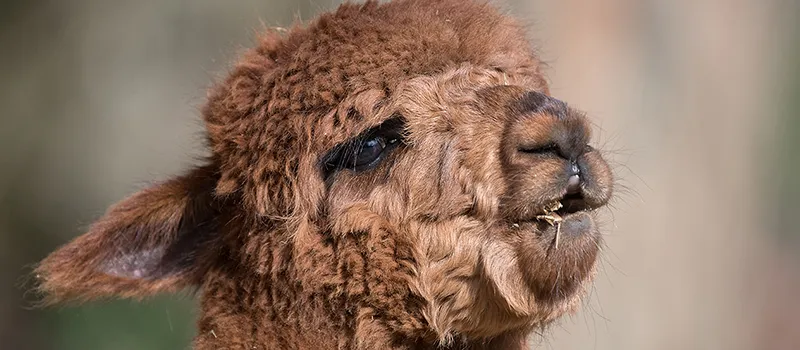
Additional information
Unlike the llama, which is often used as a pack animal, the alpaca is primarily raised for its fleece. There are two main varieties: the Huacaya alpaca, whose wool is thick, curly and voluminous, and the Suri alpaca, whose fleece forms long silky and shiny locks. These peaceful and sociable animals live in herds and communicate with each other through soft little sounds called “hums”.
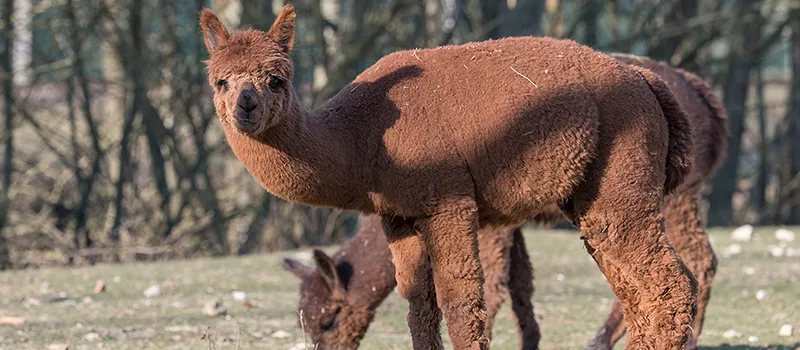
Diet
Herbivorous, the alpaca feeds essentially on grass, hay and vegetables, and its efficient digestive system allows it to extract maximum nutrients from its diet. Domesticated for over 4,000 years, it still plays an essential role in the culture and economy of Andean peoples, who consider it a living treasure thanks to the richness of its wool.