Asian Lion
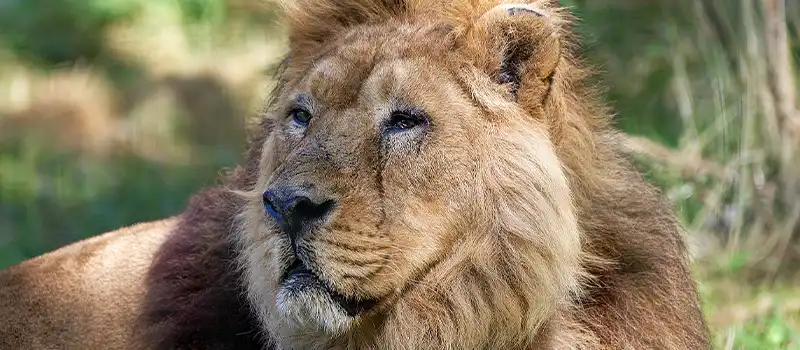
The Asian lion, also called the Indian lion or Asiatic lion, is a subspecies of lion that lives exclusively in the Gir Forest, in the state of Gujarat, India. Much rarer than its African cousin, it is today considered an endangered species and symbolizes the wildlife wealth of India.

Size and weight
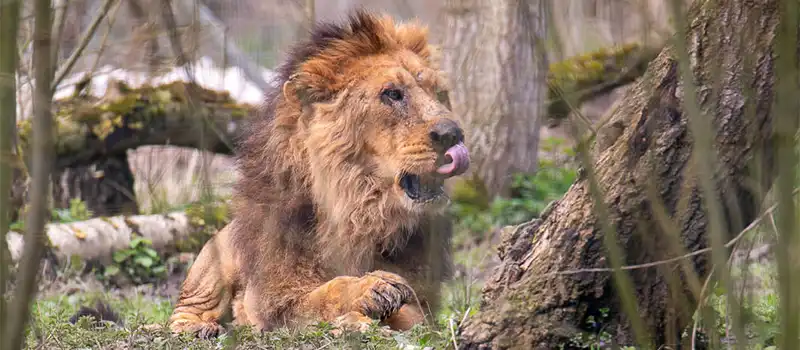
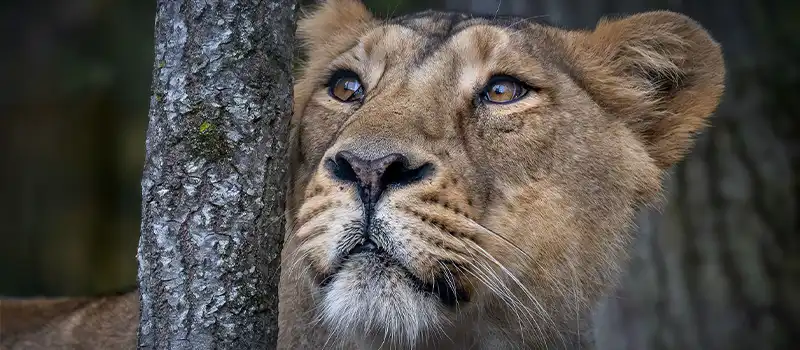
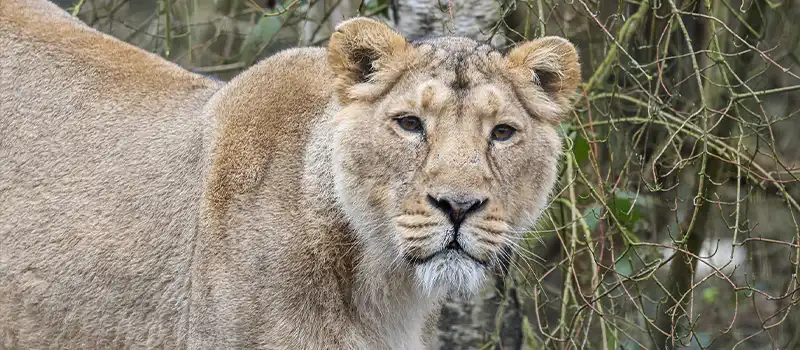
Smaller than the African lion, the Asian lion has distinctive physical characteristics. Its mane is less developed, revealing its ears, and its coat is shorter and lighter, with shades ranging from beige to sandy brown. It measures between 1.70 and 2.50 meters in length (including tail) and weighs between 110 and 190 kg for males, while females are smaller, weighing between 90 and 120 kg. Another particularity of this subspecies is the presence of a well-visible longitudinal skin fold under the belly, absent in African lions.
Habitat and distribution
The Asian lion is a social animal that lives in small groups, composed of a few related females and their young, sometimes accompanied by one or two dominant males. Unlike their African counterparts, Asian groups are generally smaller in number, which reflects the limited availability of prey in their habitat.
Diet
An opportunistic carnivore, it feeds mainly on ungulates such as axis deer, nilgai, wild boar and sometimes domestic animals like cattle. An efficient hunter, it stalks its prey with patience and often works in groups to maximize its chances of success. It is also capable of surviving in areas where water resources are scarce, obtaining most of its hydration from its prey.
Conservation and threats
Once widespread throughout the Middle East and as far as Greece, the Asian lion saw its range drastically reduced due to excessive hunting, poaching and habitat destruction. At the beginning of the 20th century, only about twenty individuals remained in the wild. Thanks to intensive conservation efforts, notably the creation of the Gir Forest National Park, its population has gradually recovered, reaching approximately 600 individuals today.