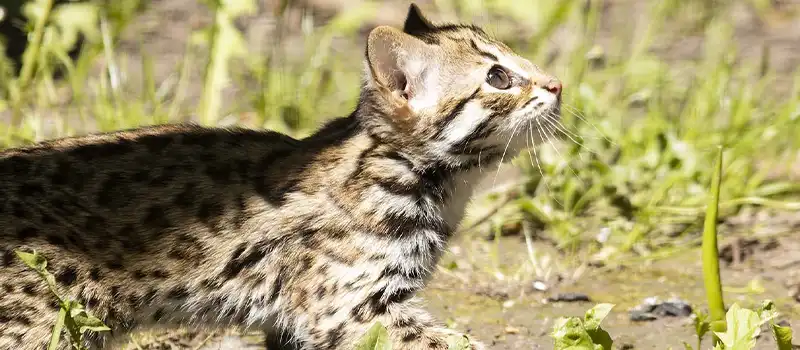
Bengal Leopard Cat
The Bengal leopard cat is a graceful and adaptable wild feline, widely distributed across Asia, from India and Sri Lanka to China, Southeast Asia, and even some islands like Sumatra and Borneo. Small but powerful, it gets its name from its spotted coat that resembles that of a leopard, although it is much smaller in size. This discreet feline lives in a wide variety of habitats, including tropical forests, grasslands, mountainous areas, and even agricultural plantations.
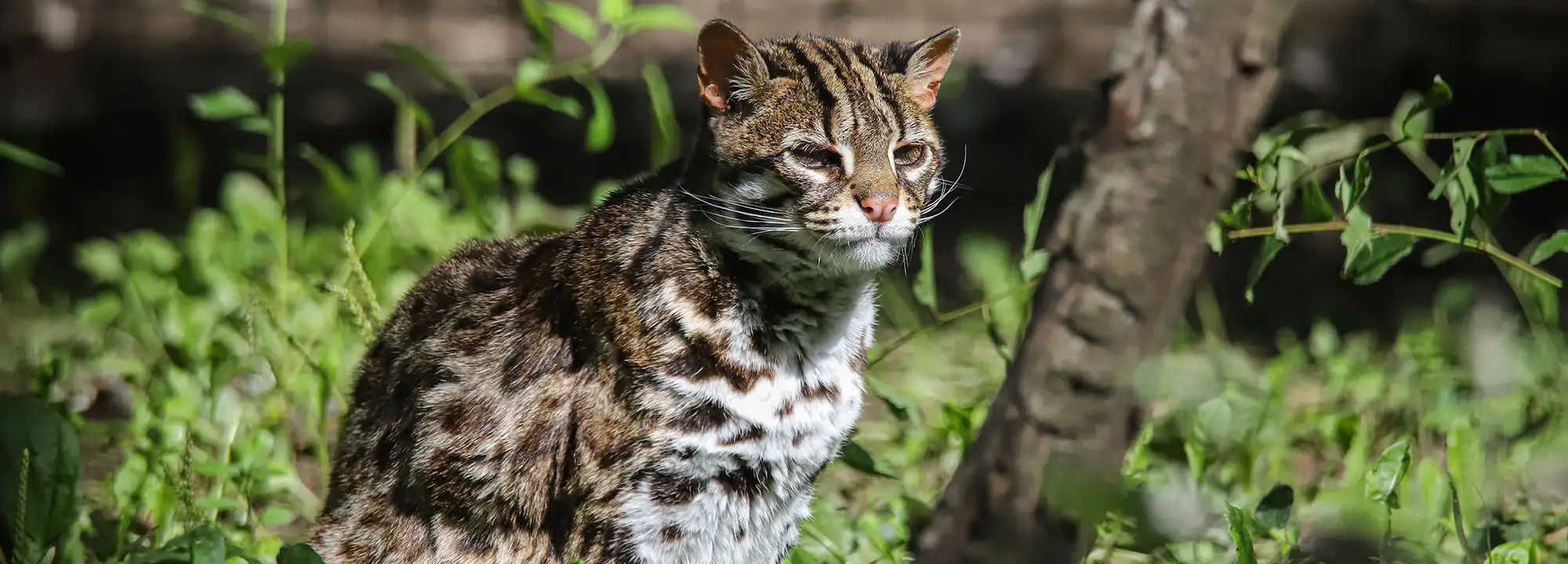
Size and weight
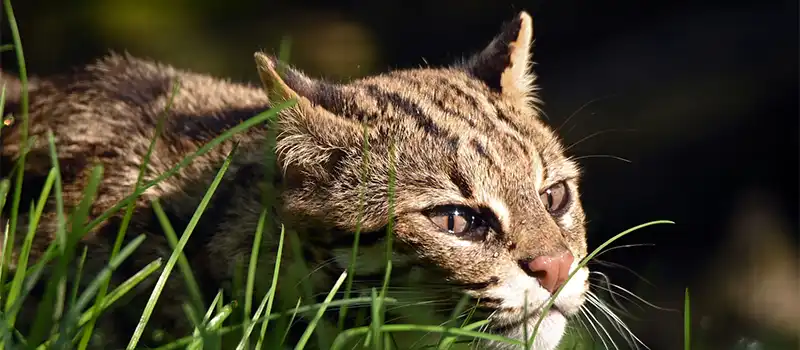
The Bengal leopard cat measures between 50 and 70 cm in length, with a tail of 20 to 30 cm, and its weight varies from 3 to 7 kg, with males generally being larger than females. Its coat varies in color, ranging from pale gray to golden fawn, scattered with black spots and rosettes that allow it to blend perfectly into its environment. Its belly is white, and its large rounded ears are marked with white spots on the back, characteristics of wild felines.
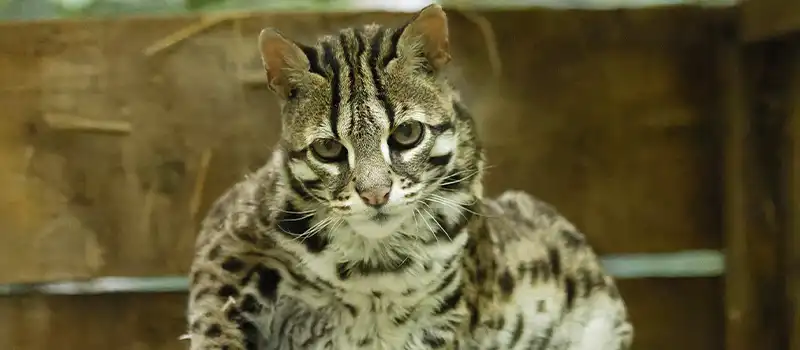
Diet
Nocturnal and solitary, the Bengal leopard cat is an opportunistic hunter, with a very varied diet. It feeds mainly on small mammals such as rodents and squirrels, but also on birds, reptiles, amphibians, and sometimes insects. It is also an excellent climber and swimmer, which allows it to diversify its hunting techniques depending on its habitat. Very adaptable, it can survive in both dense forests and agricultural areas, which gives it an advantage over other more specialized feline species.
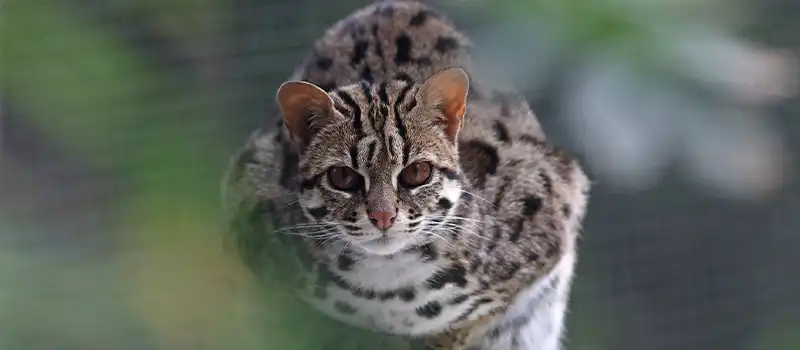
Behavior and reproduction
This feline marks its territory with scratches, head rubs, and urine spraying. Males and females only meet to mate, and the young, generally numbering two to four per litter, stay with their mother for a few months before becoming independent.
Conservation and threats
Although the Bengal leopard cat is classified as “Least Concern” by the International Union for Conservation of Nature (IUCN), some subpopulations are in danger due to habitat loss, massive deforestation, hunting for their fur, and illegal exotic animal trade. This feline is also sometimes targeted by farmers who consider it a threat to their livestock or crops.