Jaguar
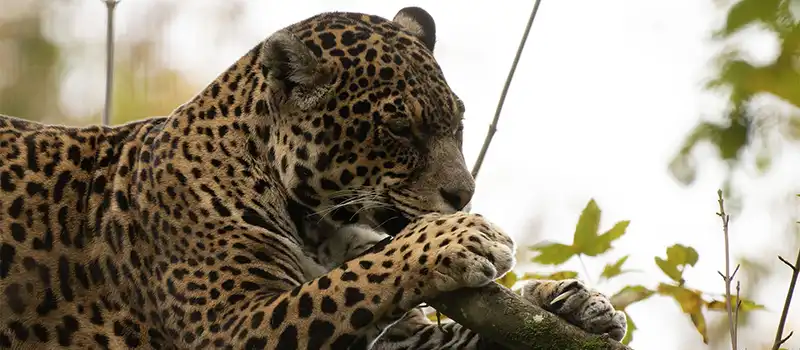
The jaguar is the largest feline in America and the third largest in the world after the tiger and the lion. This formidable predator mainly inhabits tropical forests and savannas in Central and South America, ranging from Mexico to Argentina, with a strong concentration of its population in the Amazon basin. It is the symbol of the power and majesty of America’s wild fauna.
Habitat and distribution
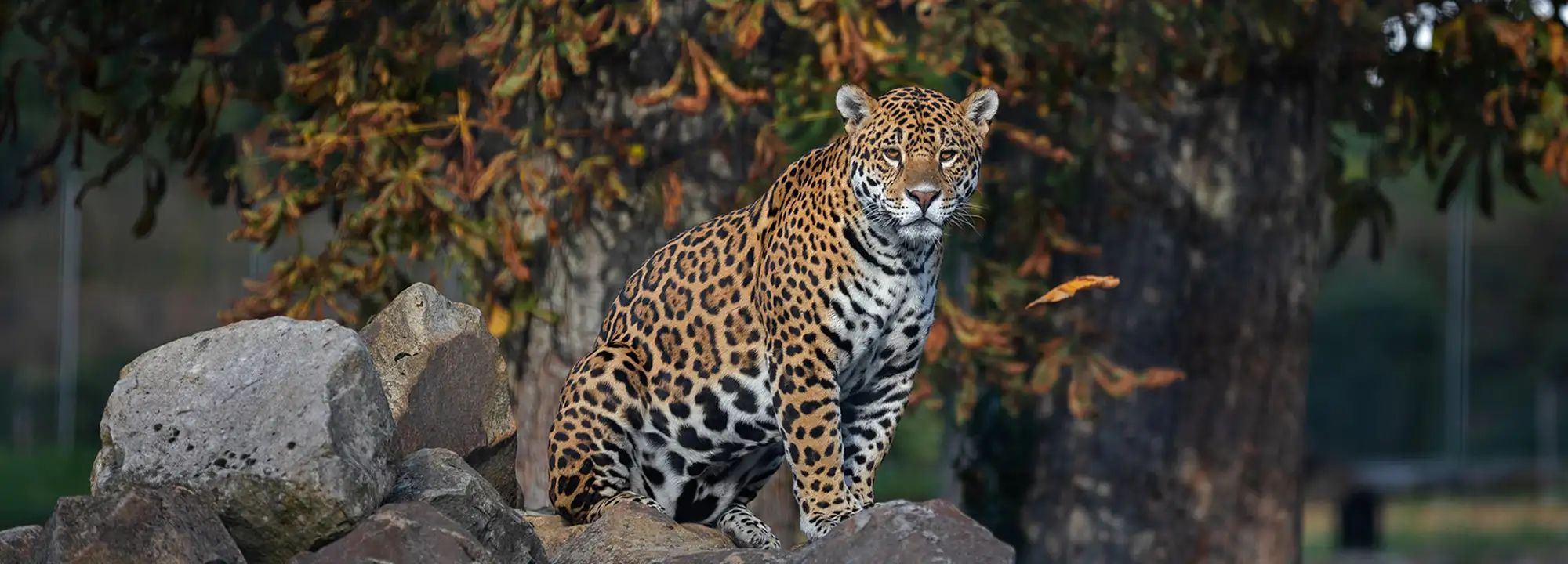
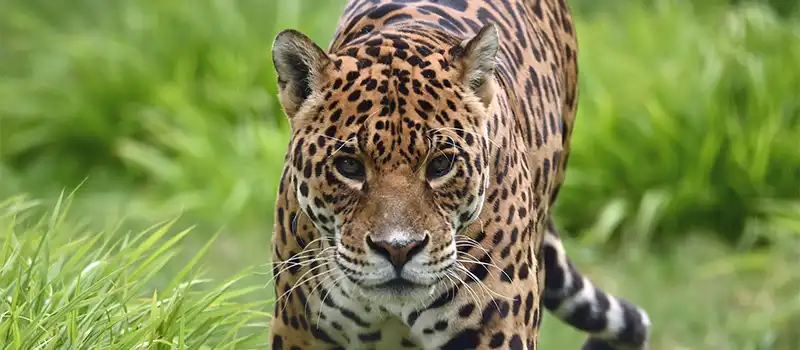
It is a robust feline, with a massive and powerful body, measuring between 1.10 and 1.85 meters in length, with a tail of 70 to 90 cm, and weighing between 45 and 120 kg on average, with males generally being larger than females. Its coat is golden to yellow in color, with numerous black rosettes that vary in shape, which allows it to camouflage perfectly in the dense vegetation of its natural habitat. Its head is wide, its jaws are powerful, and its teeth are adapted to pierce the shells of turtles or tear the thick skin of its prey. It is indeed its bite, one of the most powerful among felines, that makes it a formidable hunter.
Diet
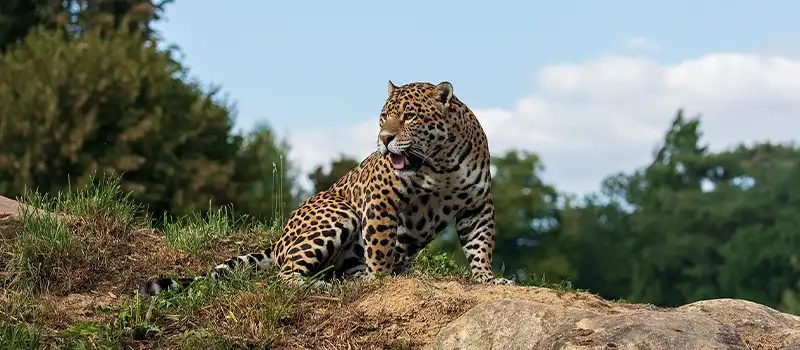
The jaguar is an opportunistic carnivore, feeding on a wide range of prey, from capybaras and tapirs to cervids, as well as monkeys, birds, and even crocodiles or turtles. Unlike many other felines, it sometimes hunts in a more direct and less stealthy manner, using its brute force to kill its prey. It is also renowned for its habit of killing with a powerful bite directly to the skull or the back of the neck, penetrating deeply into the bones. It is an excellent swimmer and can also hunt in water, pursuing aquatic prey such as fish or caimans.
Habitat and distribution
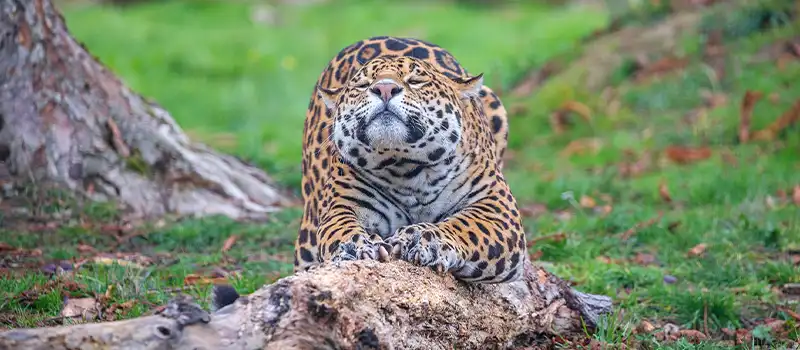
It is a solitary and territorial predator. It roams vast areas of tropical forests, wetlands and savanna, often in remote and difficult to access areas. Its territory can cover 25 to 50 square kilometers, depending on the density of available prey. The jaguar is a nocturnal and crepuscular animal, although some individuals may be active during the day, particularly in areas where humans are less present. Its scent marks and scratches on trees serve to delimit its territory.
Conservation and threats
Although the jaguar is currently classified as “Near Threatened” by the International Union for the Conservation of Nature (IUCN), it faces several threats, including loss of habitat due to deforestation, agricultural expansion, and illegal hunting for its fur and teeth.