Margay
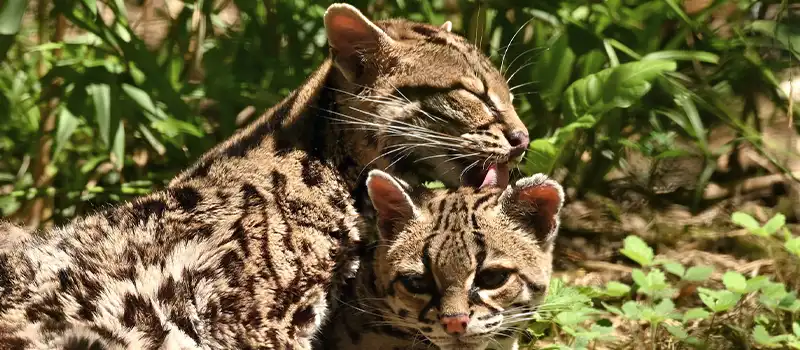
The margay is a small wild feline native to the tropical and subtropical forests of Central and South America, mainly present from Mexico to Brazil and Argentina. This nocturnal and discreet predator is one of the most fascinating felines, notably thanks to its exceptional ability to climb trees.
Habitat and distribution
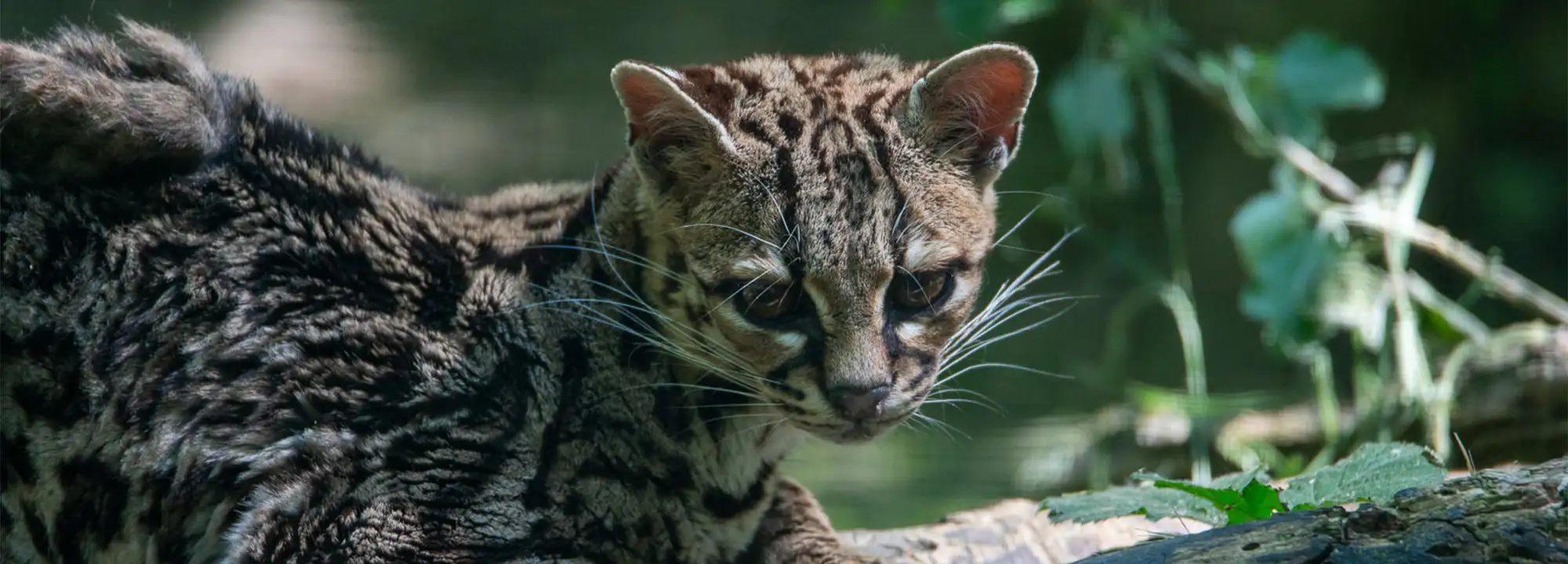
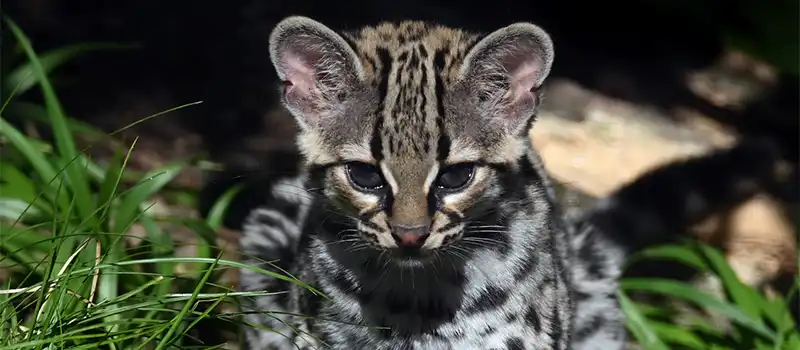
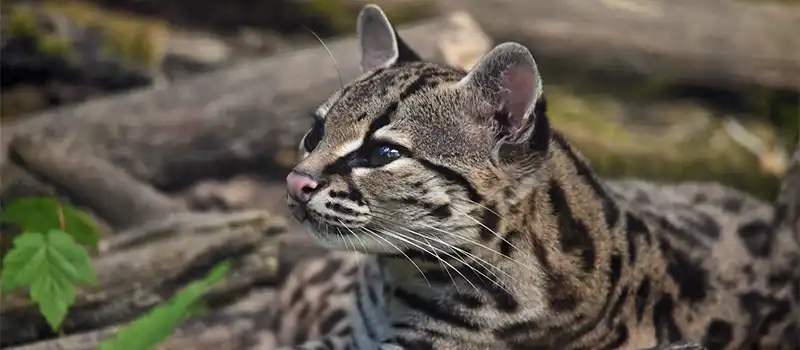
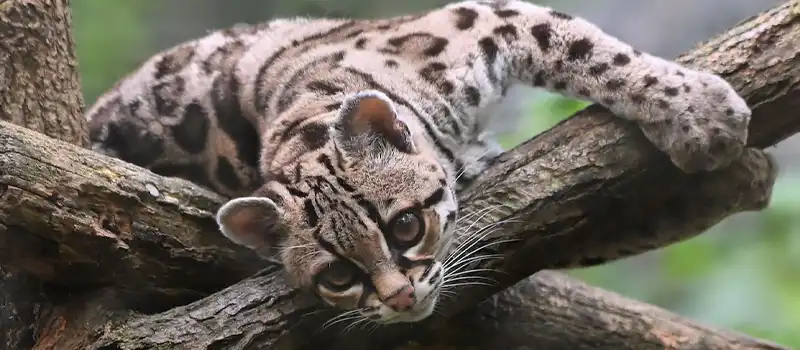
It is easily recognizable thanks to its spotted coat. Its coat varies from light beige to gray, scattered with numerous black rosettes and dark spots, which allows it to blend perfectly into the undergrowth of dense forests where it evolves. It generally measures between 45 and 60 cm in length, not counting its tail, which can reach 30 to 40 cm. Its weight varies between 2.5 and 4 kg, making it a small-sized feline, much smaller than the ocelot, its larger cousin. Its slender silhouette, with long legs and sharp claws, gives it unparalleled agility, ideal for its arboreal life.
Diet
The margay is a strict carnivore and an extremely agile hunter. It feeds mainly on small mammals such as rodents, monkeys, marsupials, but also birds, reptiles and sometimes insects. This feline is renowned for its exceptional abilities to move in trees, where it can even jump from one tree to another with great precision. Its flexibility and retractable claws allow it to climb vertically up tree trunks, slip through foliage and hunt in the undergrowth or heights.
Habitat and distribution
It lives in dense tropical forests, where it finds both hiding places to rest and a wide variety of prey. It is mainly nocturnal and solitary, marking its territory by scratches on trees and olfactory signs. Its reproduction is poorly documented, but it seems to have seasonal reproductive activity, giving birth to a litter of 1 or 2 young.
Conservation and threats
The margay is currently classified as “Near Threatened” by the International Union for the Conservation of Nature (IUCN). Although it is still relatively common in some regions, the loss of its habitat due to deforestation and illegal wildlife exploitation are major threats to its survival.