Habitat and distribution
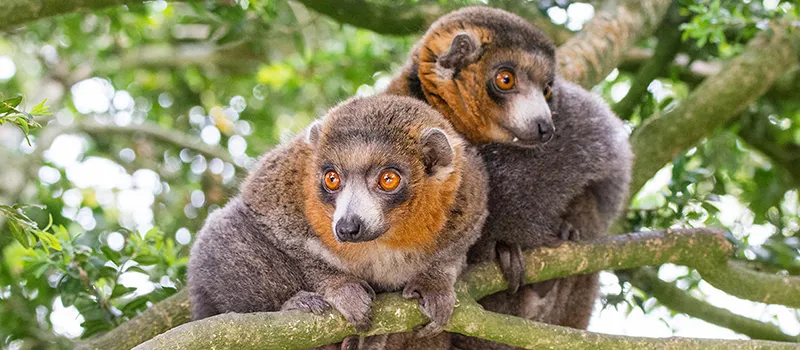
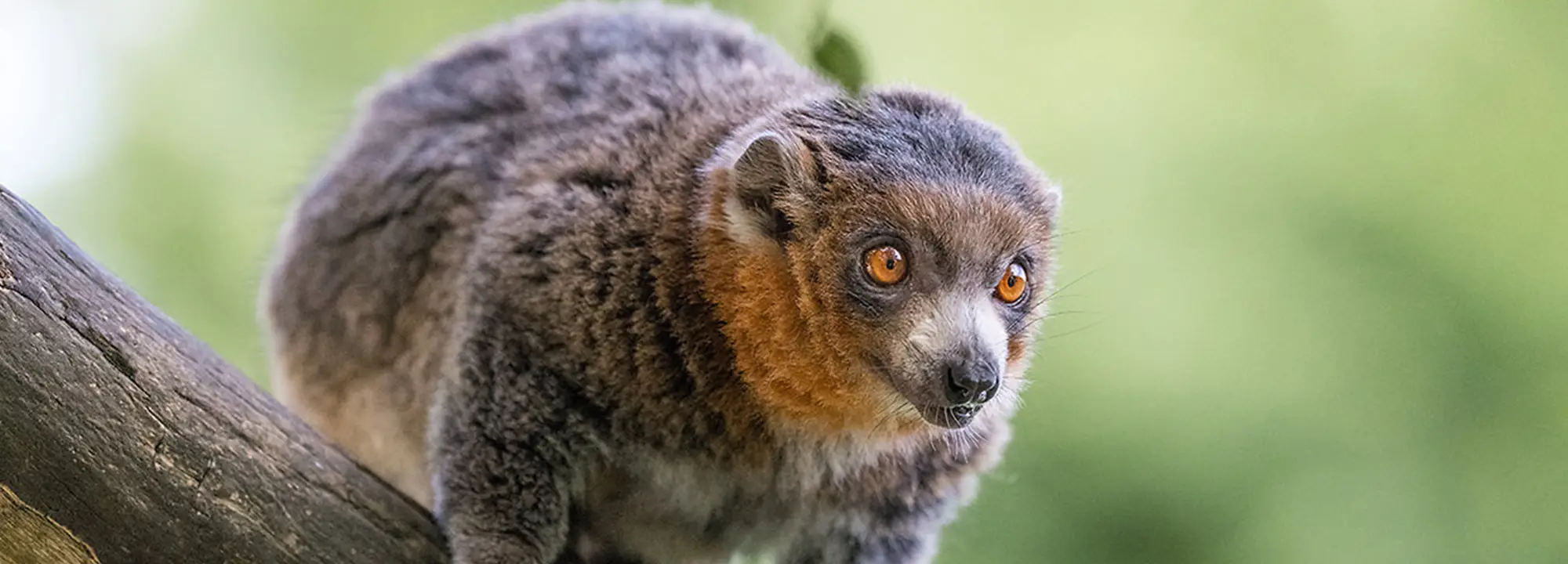
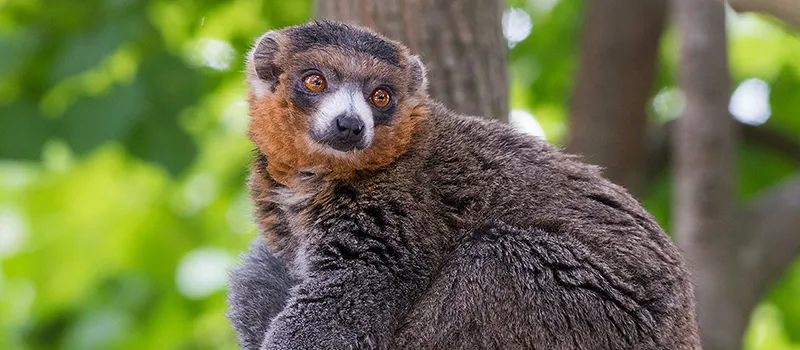
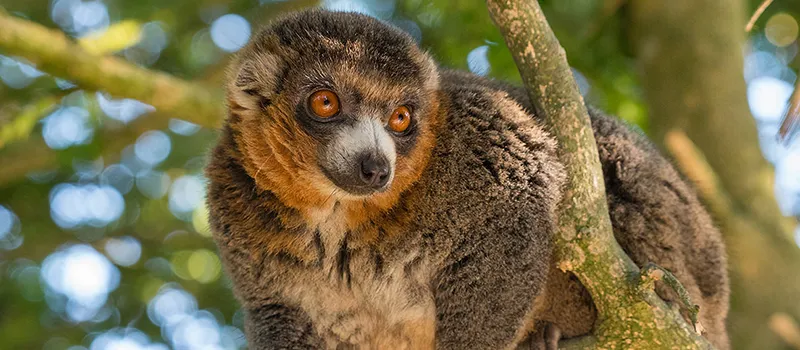
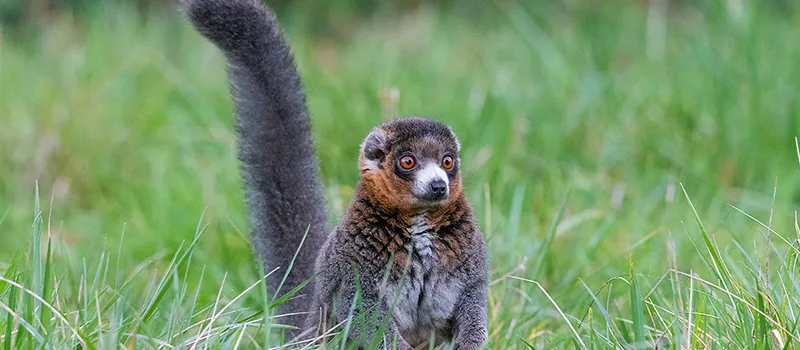
Its fur varies from dark brown to gray on the back, while its belly is lighter. Its head is marked by a black band that surrounds its eyes and descends to the muzzle, giving its face an intense expression. Its long bushy tail, although not prehensile, serves it for balance as it moves through the canopy.
Behavior and reproduction
The mongoose lemur measures approximately 35 to 40 cm, with a tail that can reach 50 cm. Its weight varies between 1.5 and 2 kg. It is primarily arboreal and moves with agility among the branches, although it sometimes descends to the ground in search of food.
Habitat and distribution
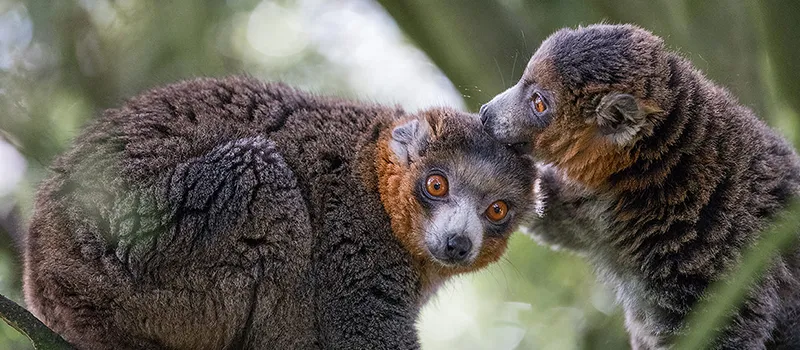
It is found in the humid tropical forests of eastern and northern Madagascar. It lives in small family groups where social hierarchy is dominated by females. This matriarchal way of life is common among lemurs.
Diet
Its diet is essentially frugivorous, but it also consumes leaves, nectar, flowers and sometimes insects. It plays an essential ecological role in dispersing seeds, thus contributing to forest regeneration.
Conservation and threats
The mongoose lemur is threatened by deforestation, hunting and fragmentation of its habitat.