Northern Oncilla
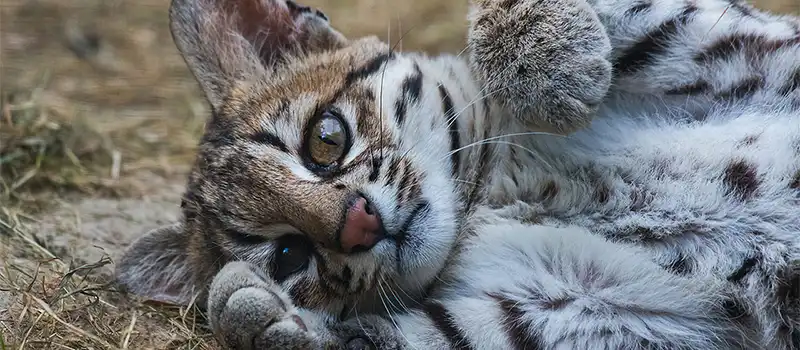
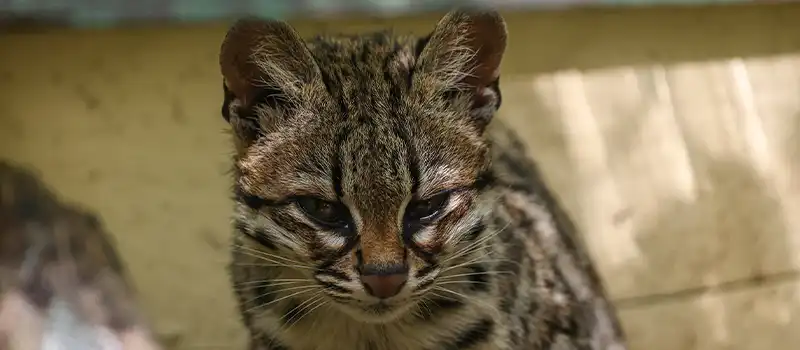
The Northern Oncilla, also called tiger cat, is a small wild feline that inhabits the tropical and subtropical forests of Central America and northern South America, particularly in the mountainous regions of Venezuela, Colombia, Ecuador, Peru and Brazil. This discreet predator, still poorly known, is a true chameleon of the fauna, perfectly adapted to dense forest environments.
Size and weight
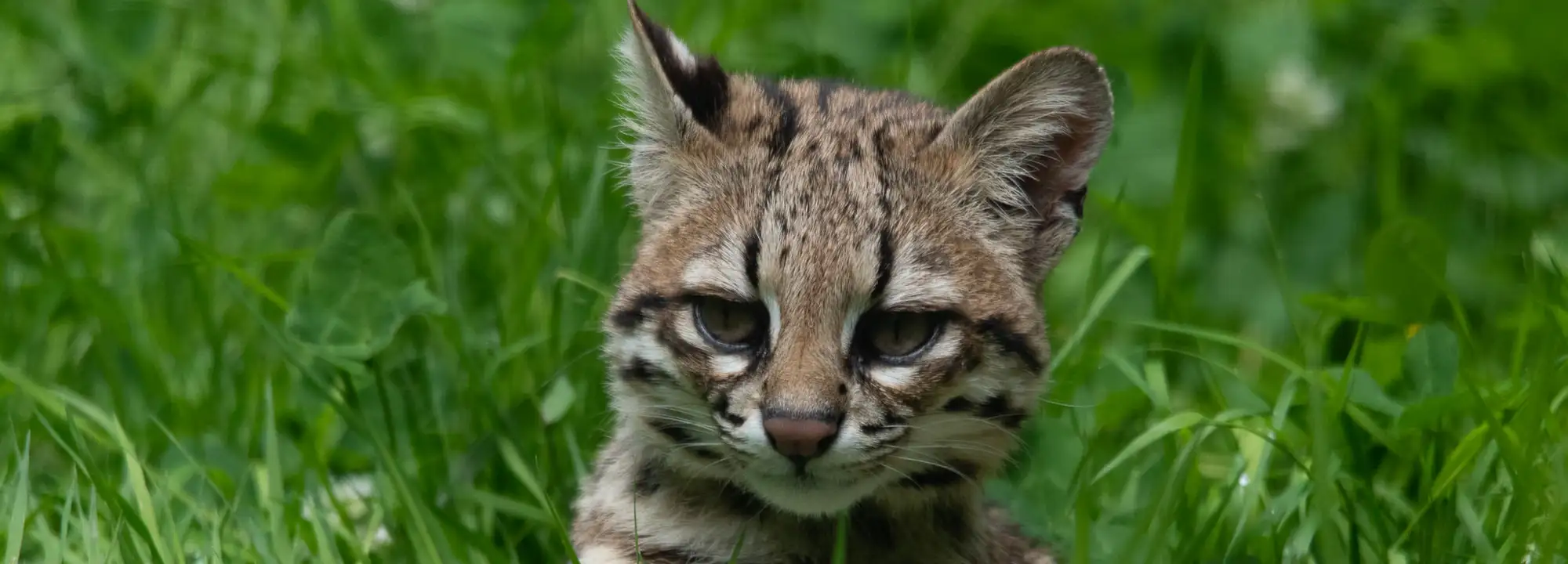
Its coat, short and soft, is a light tan to golden color, spotted with small black rosettes that give it perfect camouflage in the dense jungle vegetation. Its size is modest, with a body length of 50 to 70 cm and a weight varying between 2 and 4 kg, making it one of the smallest felines in South America. Its tail is quite long and finely marked with black circles, which helps it maintain balance when moving through the trees.
Diet
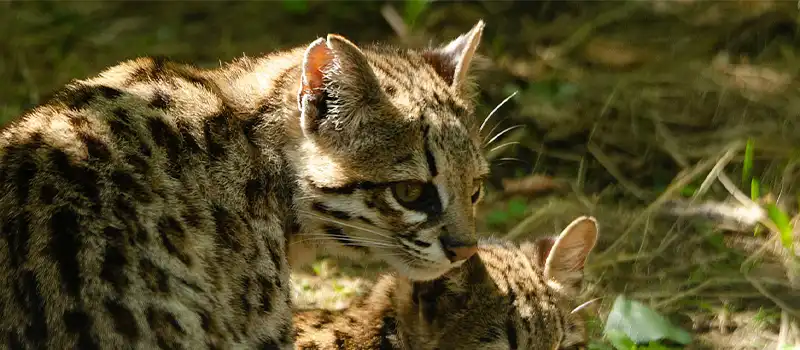
Strict carnivore, the Northern Oncilla hunts mainly small mammals such as rodents and marsupials, birds and reptiles. Thanks to its small size, it can easily slip through dense vegetation and climb trees to capture prey or avoid predators. Active mainly at night, it uses its discretion and its sharp auditory and visual abilities to locate its prey in the darkness.
Habitat and distribution
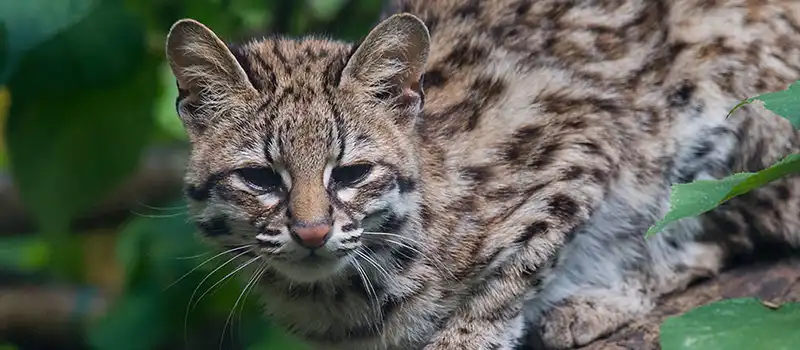
The tiger cat inhabits humid tropical forests and mountain areas, where it finds a wide range of prey and shelter sites. It is a solitary animal, with a territory that each individual defends against its congeners. Although little information is available on its social behaviors, it appears to have seasonal reproduction with litters of 1 to 3 young.
Conservation and threats
Although the Northern Oncilla is classified as “Near Threatened” by the International Union for the Conservation of Nature (IUCN), its population is in decline due to massive deforestation that destroys its natural habitat, as well as hunting and poaching for its fur. Forest fragmentation and human activities constitute major threats to the survival of this species.