Persian Leopard
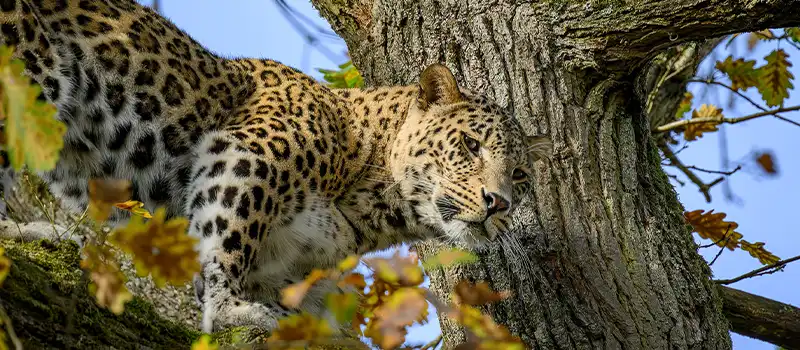
The Persian leopard is one of the largest and most majestic subspecies of leopard. Native to the mountains and forests of Western Asia, it evolves mainly in Iran, the Caucasus, Turkey, Afghanistan and Turkmenistan. This rare and discreet feline is emblematic of the steep landscapes of these regions.
Size and weight
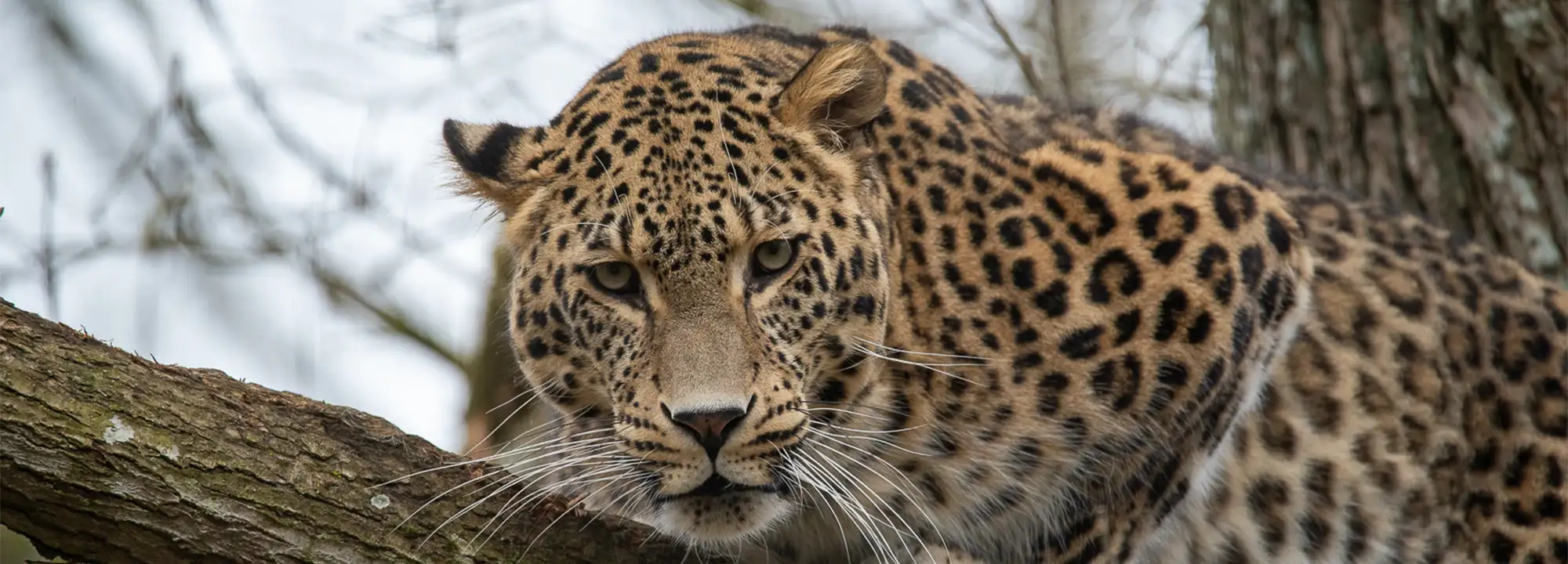
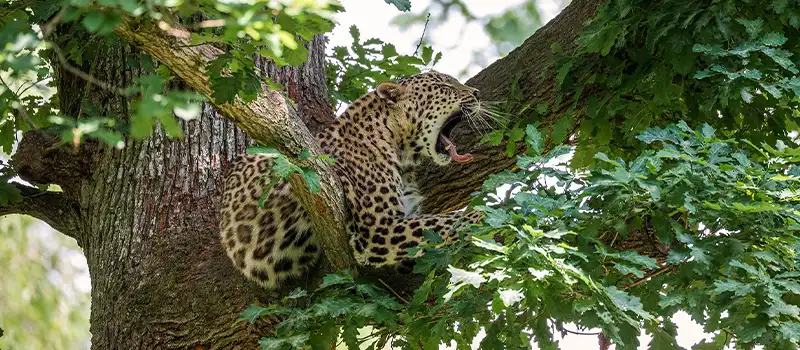
Its light beige to golden coat, marked with large black rosettes, offers it perfect camouflage in rocky and wooded areas. In winter, its fur becomes thicker and slightly paler, allowing it to resist the harsh temperatures of the mountains. Males measure up to 1.90 meters long (not counting their tail which can reach 90 cm) and weigh between 50 and 70 kg, while females, smaller, are around 30 to 50 kg.
Diet
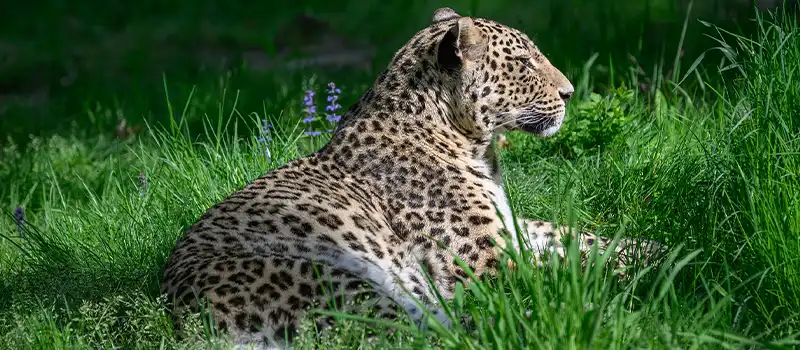
It is a solitary and twilight hunter, roaming vast territories to track its prey. Its diet is varied, composed mainly of mouflon, roe deer, chamois and wild boar, but it can also capture hares and other small mammals. Thanks to its power and agility, it is capable of mastering prey larger than itself, which it then drags to hiding places to feed in safety.
Habitat and distribution
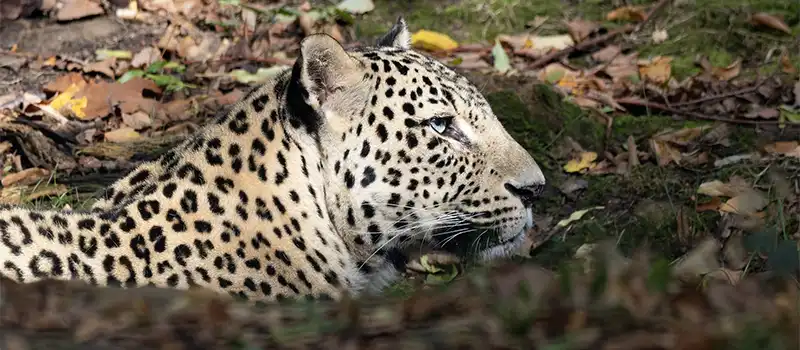
Inhabiting mountainous areas, rocky plateaus and scattered forests, the Persian leopard is perfectly adapted to these hostile environments. It uses cliffs and crevices to rest and hide, while remaining close to water sources and areas where prey is abundant.
Conservation and threats
The Persian leopard is classified as endangered by the International Union for Conservation of Nature (IUCN). Its population is threatened by hunting, habitat destruction, the decline of its natural prey and conflicts with herders.