Habitat and distribution
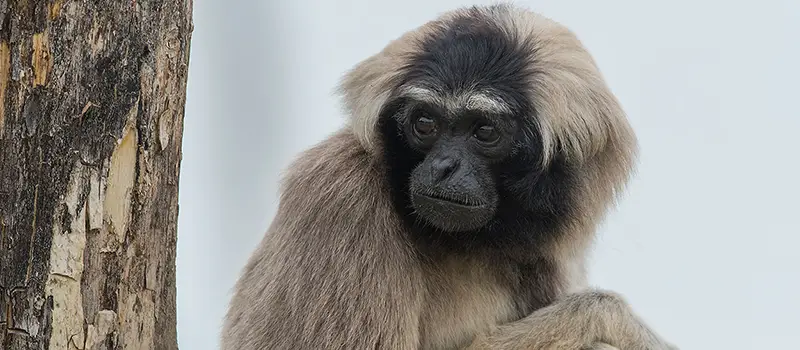
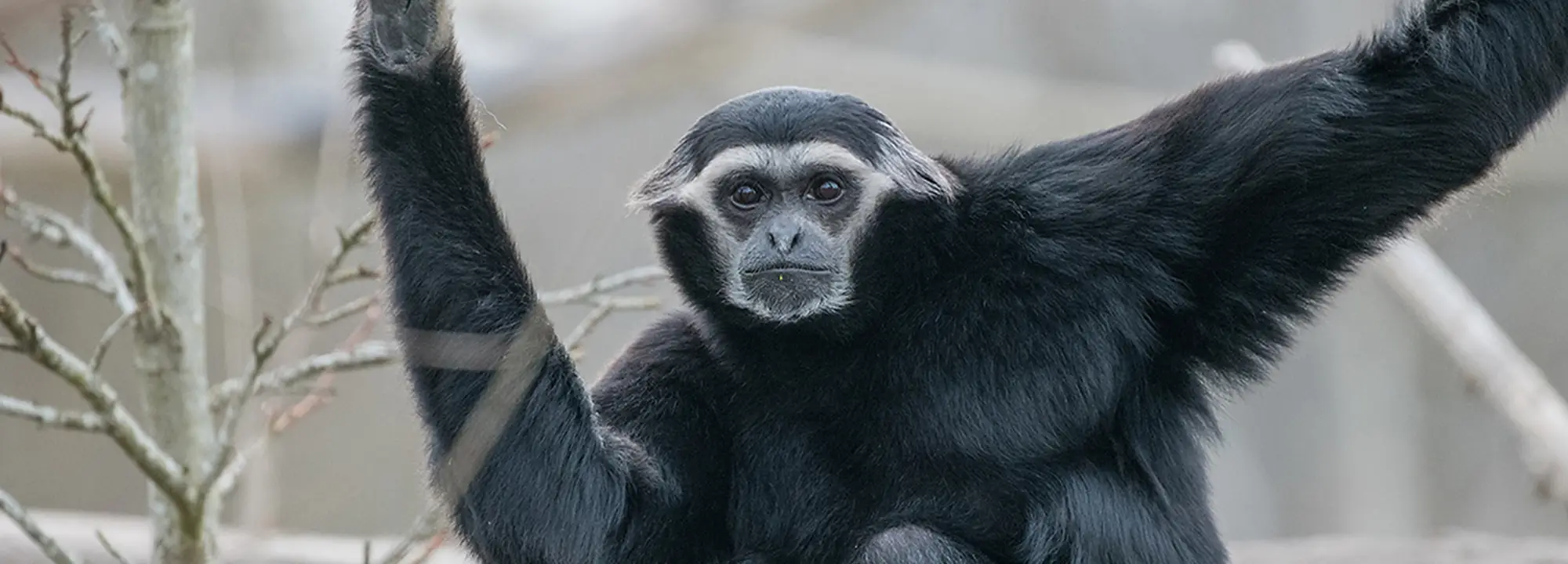
This medium-sized primate owes its name to the dark cap that adorns the top of its head, contrasting with the lighter hue of its face surrounded by a distinctive whitish ring. Its fur varies from dark brown to black in males, while females display a lighter coat, ranging between beige and golden brown. Its slender body and long arms allow it to swing with great agility across the canopy.

Size and weight
The Pileated Gibbon measures approximately 60 to 90 cm in length, with an average weight ranging from 6 to 9 kg. Unlike New World monkeys, it does not have a tail, but compensates with exceptional skill in arboreal locomotion.
Habitat and distribution
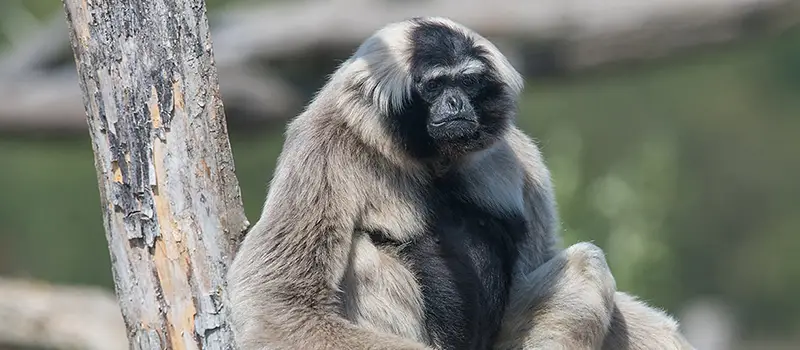
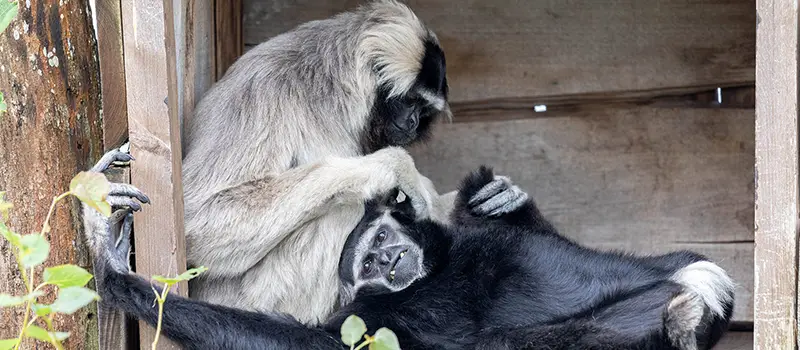
It is found mainly in the tropical and subtropical forests of South Asia, particularly in India (Assam, Arunachal Pradesh), Bangladesh and Myanmar. It lives in small family groups composed of a monogamous couple and their young, maintaining strong bonds through powerful vocal duets that serve to mark their territory and strengthen social relationships.
Diet
The Pileated Gibbon is frugivorous, feeding mainly on fruits, flowers, young leaves and occasionally insects. Its role in seed dispersal is crucial for maintaining forest biodiversity.

Conservation and threats
This species is threatened due to deforestation, habitat fragmentation and poaching.