Rusty-spotted Cat
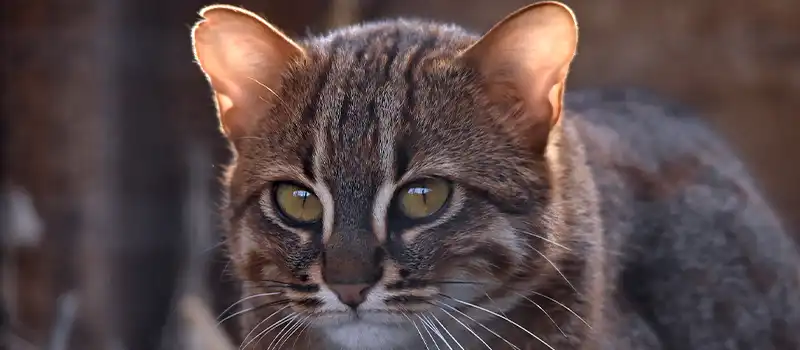
The rusty-spotted cat, also known as the reddish cat, is one of the smallest felines in the world, and certainly one of the most unknown. This discreet feline lives in humid and dry tropical forests, as well as in brushy areas of India and Sri Lanka. Its small size and furtive behavior make it a master of camouflage and discretion.
Behavior and reproduction
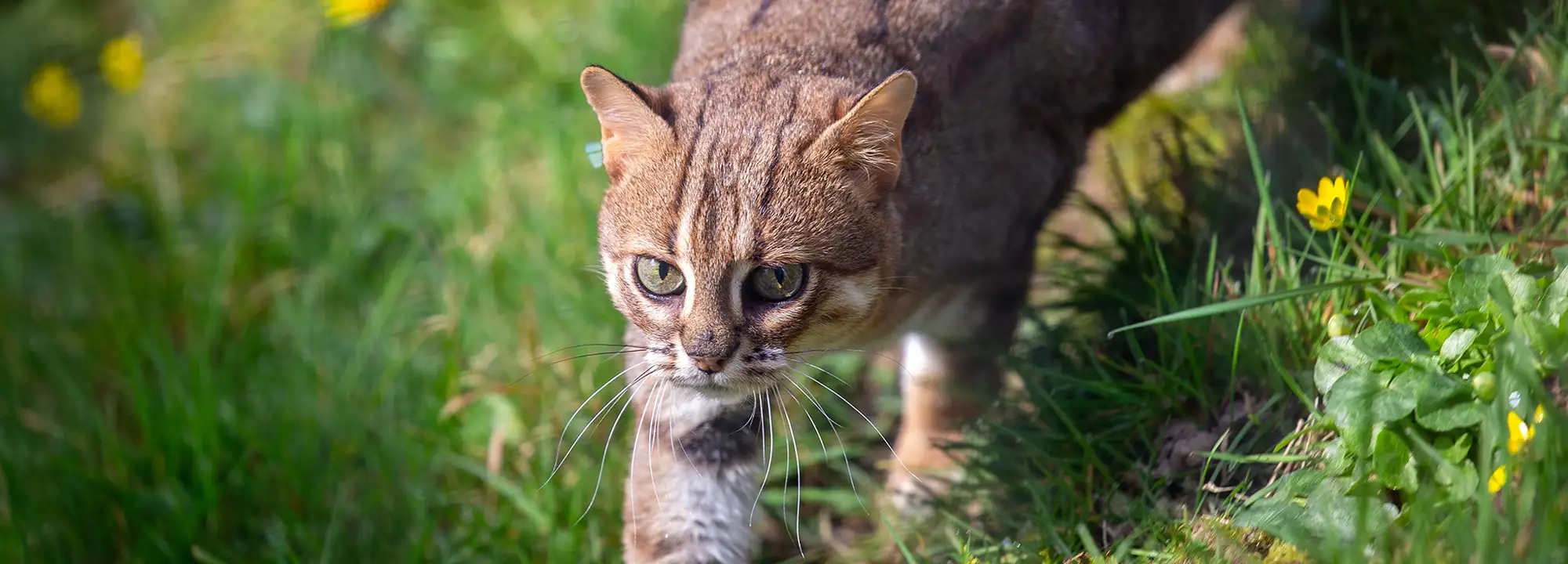
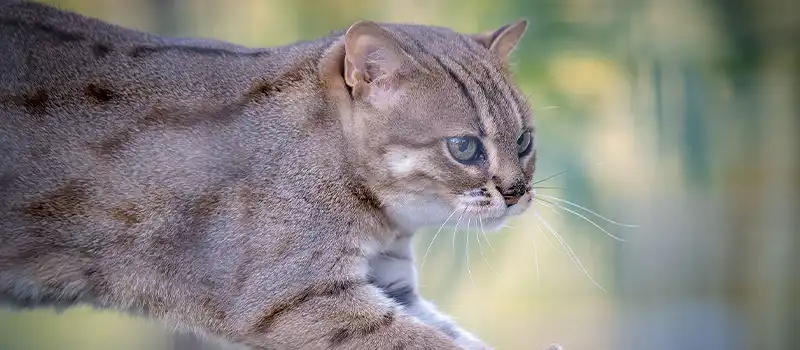
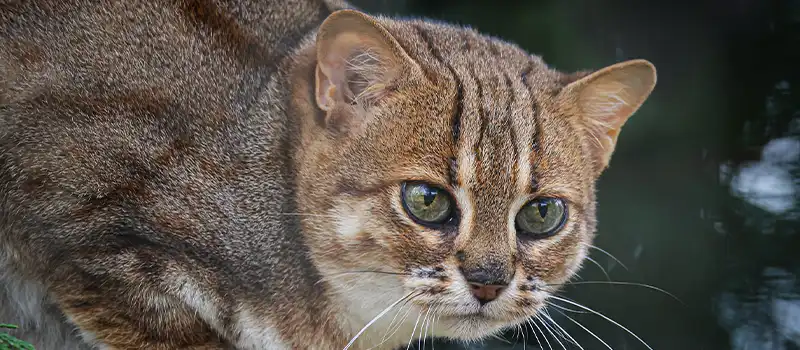
This small feline measures between 35 and 48 cm long, with a tail of 15 to 30 cm, and weighs only 1 to 1.5 kg, making it barely larger than a domestic kitten. Its coat is brownish-gray, marked with dark reddish spots on the back and flanks, and its belly is white, often adorned with small dark spots. Its large round eyes, with a golden or green hue, are perfectly adapted for night vision, while its small size and spotted coat allow it to blend into its natural environment.
Diet
The rusty-spotted cat is a nocturnal and crepuscular hunter, essentially solitary. It feeds mainly on small rodents, birds, lizards and insects. Agile and quick, it is capable of climbing trees to capture prey or escape predators, although it hunts mainly on the ground. Its discretion and ability to sneak through dense thickets are its best assets for avoiding danger.
Conservation and threats
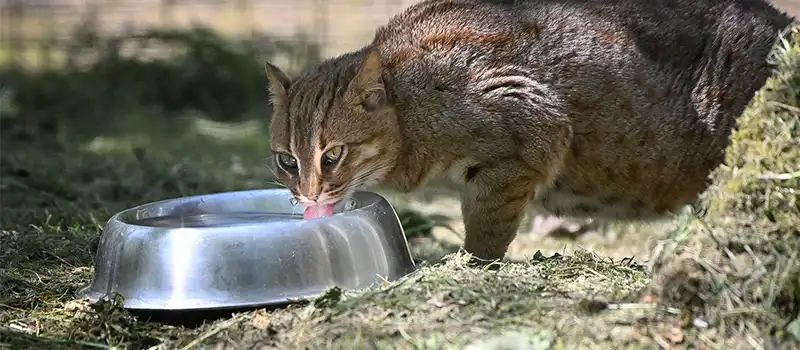
Despite its adaptability to various habitats, the rusty-spotted cat faces numerous threats. Massive deforestation, conversion of land to agricultural areas, and conflicts with humans, particularly the use of pesticides that poison its prey, endanger its populations. Although it is classified as “Near Threatened” by the International Union for Conservation of Nature (IUCN), its exact status is difficult to assess due to its secretive nature and limited studies on the subject.
Additional information
This small feline, often described as a true jewel of Asian wildlife, remains a striking example of the diversity of wild felines and the need to protect their habitats to ensure their survival.