Snow Leopard
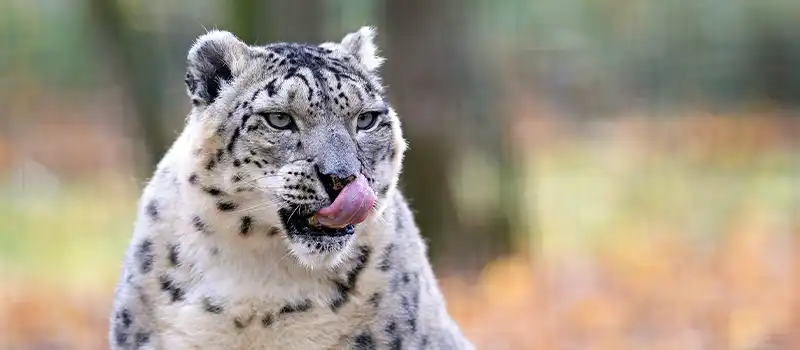
The snow leopard, also called the snow leopard, is one of the most emblematic and mysterious felines of the mountains of Central Asia. Adapted to the rigors of the high Himalayan plateaus, from Tibet to Afghanistan, passing through Kyrgyzstan and Nepal, this great snow cat embodies the beauty and solitude of the mountainous landscapes it inhabits.
Size and weight
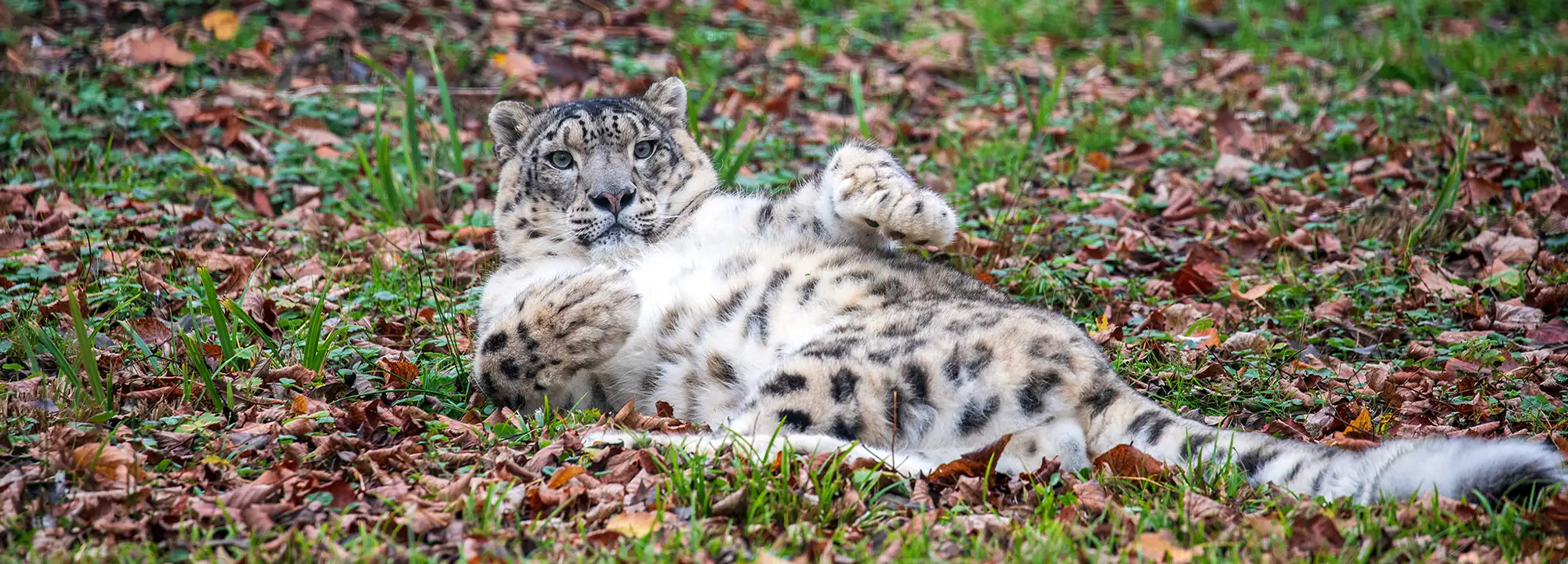
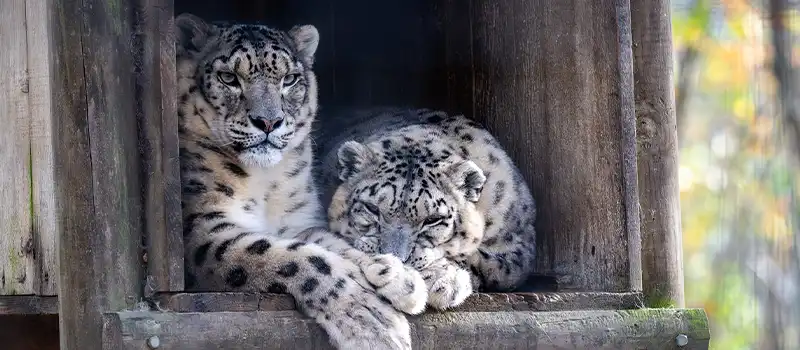
Its thick and woolly coat is pale gray to white, scattered with black spots and irregular rosettes that allow it to blend perfectly into rocky and snowy terrain. This dense fur protects it from freezing temperatures, which can drop to -40°C. Its long and bushy tail, which can measure up to one meter, helps it not only maintain its balance during its movements in steep mountains, but also serves as a cover against the cold, which it wraps around its body to insulate itself.
Conservation and threats
Measuring on average 1.20 to 1.50 meters long, including the tail, and weighing between 35 and 55 kg, the snow leopard is an extremely agile and stealthy predator, capable of moving silently through the mountains. Its wide paws, equipped with powerful claws, help it move through deep snow without sinking, and to capture prey such as wild sheep, goats, rabbits and sometimes even birds, with the help of its agility and strategic mind. It hunts mainly alone, but it is also capable of traveling great distances to follow its prey in this vast mountainous territory.
Behavior and reproduction
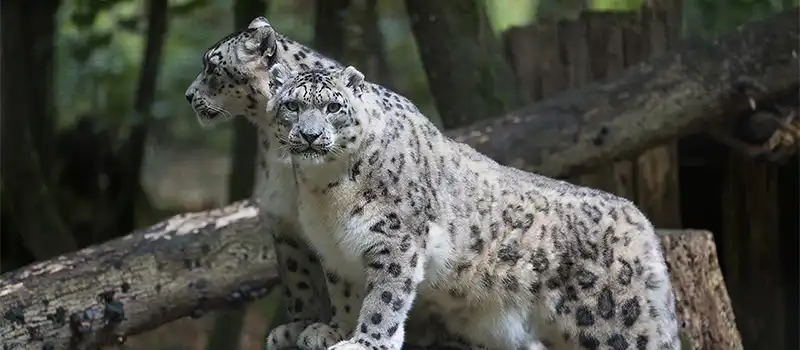
This solitary predator is renowned for its discretion and secretive nature, which makes its behaviors and biology still largely mysterious. Snow leopards are moreover more visible at night, their night vision being exceptionally developed to adapt to their environment, where daylight is often dim due to the heights.
Conservation and threats
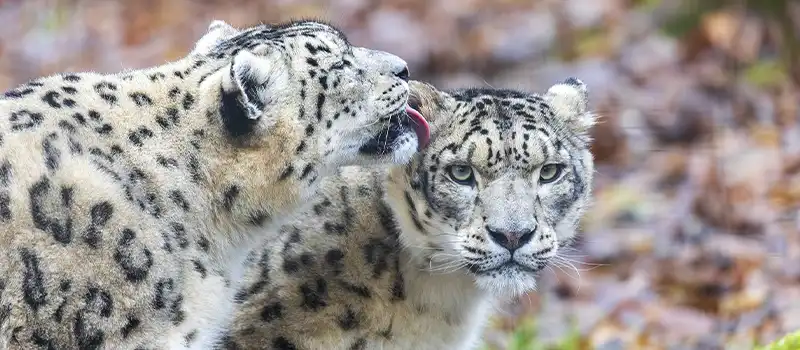
The snow leopard is today classified as “vulnerable” by the IUCN, with a population estimated at less than 7,000 individuals in the wild. The main threats facing this majestic species include the loss of its habitat due to the expansion of human activities, poaching for its precious fur, as well as illegal trade in organs, used in traditional medicine.