Sumatran Tiger
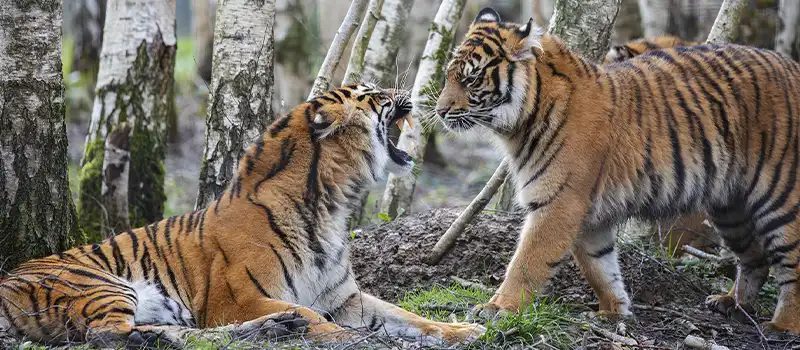
The Sumatran tiger is a tiger subspecies endemic to the island of Sumatra, Indonesia. It is the smallest of the still-existing tigers and one of the most threatened, with an estimated population of fewer than 400 individuals in the wild. This emblematic feline is a symbol of the unique biodiversity of the Indonesian archipelago.

Habitat and distribution
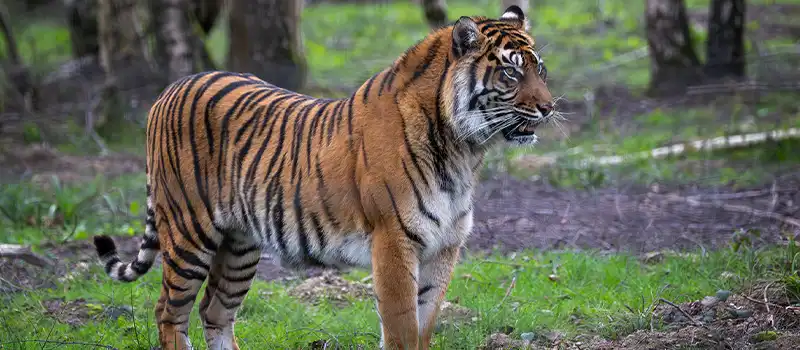
It measures between 2.20 and 2.50 meters, including the tail, and weighs between 90 and 140 kg for males, while females are smaller, weighing between 65 and 90 kg. Its coat is orange, slightly darker than that of other subspecies, with thinner and more closely spaced black stripes, often broken into rosettes. These stripes provide perfect camouflage in Sumatra’s dense forests. Its robust hind legs and long tail give it great agility to move through an environment that is often rugged and difficult to access.
Diet
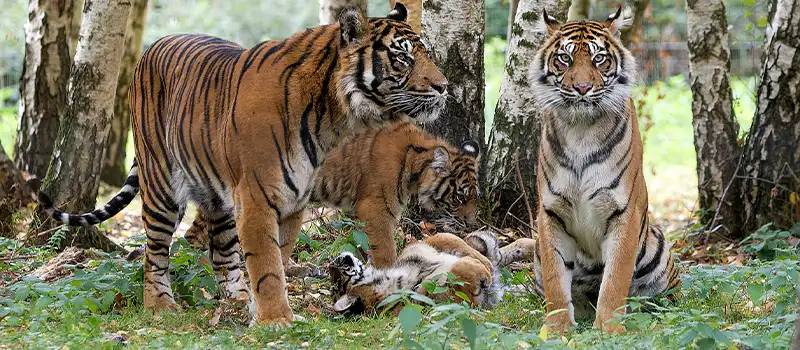
A strict carnivore, the Sumatran tiger feeds on various animals, including cervids, wild boars, primates and, sometimes, birds. This solitary predator hunts mainly at dawn or dusk, using its discretion to approach its prey silently before pouncing. Thanks to its powerful jaws and sharp claws, it is capable of subduing prey much larger than itself. It can travel several kilometers per day to find food.
Habitat and distribution
This tiger lives mainly in tropical rainforests, swamps and lowland plains on the island of Sumatra. It is particularly adapted to these dense and lush habitats, where it can find a refuge relatively isolated from human activities. The Sumatran tiger is a territorial animal, with each individual occupying a home range that it marks with scratches, urine and vocalizations. The breeding period has no specific season, and the female gives birth to a litter of 2 to 4 young after a gestation of approximately 100 days.
Conservation and threats
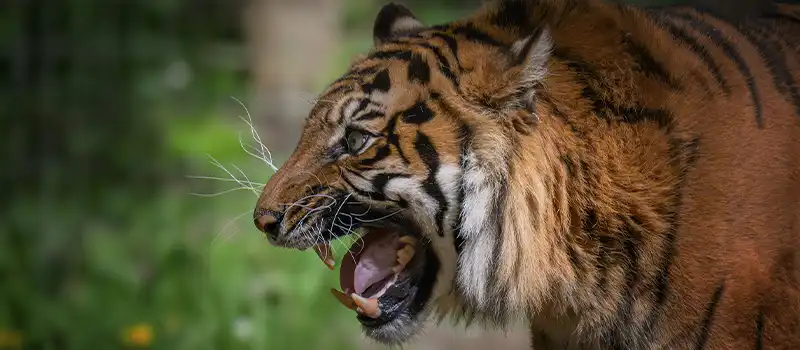
This feline is seriously threatened by habitat loss due to deforestation, palm oil plantation exploitation and agricultural expansion.